
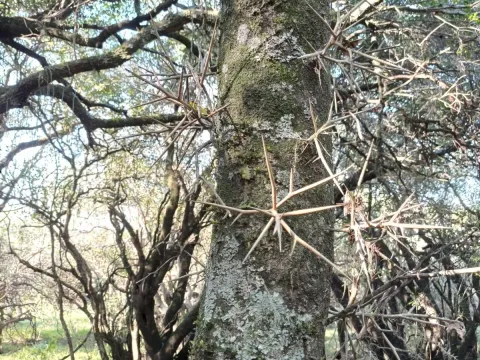
Gleditsia amorphoides
Gleditsia amorphoides
Gleditsia amorphoides is a leguminous tree species belonging to the Fabaceae family, native to the South American region, particularly flourishing in Argentina and Paraguay.
What the section contains
Gleditsia amorphoides
The plant is known for its remarkable ability to thrive in diverse soil conditions, showing a particular affinity for well-drained soils and an ability to adapt to degraded environments.
Climate requirements include a preference for warm temperatures and significant sunlight exposure, which is vital for the rapid vegetative growth and development of the canopy.
Agronomic management involves selecting sites with adequate space for root expansion, as the tree develops a profound root system that aids in soil stabilization and nitrogen fixation.
As a multipurpose species, it is highly regarded for its potential in agroforestry, providing high-quality timber and serving as a sustainable source of animal fodder in tropical regions.
The primary threats to the health of these trees involve fungal infections that target the roots, especially in soils that lack proper drainage or suffer from water stagnation.
Various defoliating insects pose a risk during the wet season, capable of significantly reducing leaf area and affecting the photosynthetic capacity of the plants.
Bark-boring beetles can compromise the structural integrity of older trees, making regular inspection of the trunk and branches a necessary part of plantation maintenance.
Environmental stress, such as extreme temperature fluctuations, can also weaken the trees, making them more susceptible to opportunistic pathogens and viral infections.
Integrated pest management strategies, including the use of resistant varieties and periodic sanitation pruning, are essential to ensure long-term productivity and tree longevity.