
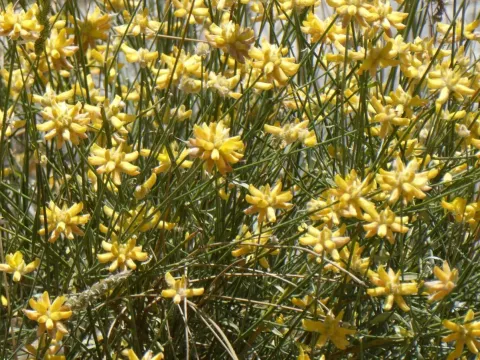
Genista umbellata
Genista umbellata
Sowing of Genista umbellata seeds should be performed in spring once the soil temperature is consistently warm, usually reaching 15–18 degrees Celsius. Scarifying the seeds beforehand is recommended to overcome the physical dormancy typical of leguminous species.
What the section contains
Genista umbellata
Seeds are sown into a well-draining potting mix or prepared seedbeds at a shallow depth of 1–2 centimeters. Proper seed-to-soil contact is essential for uniform germination and early establishment of the root system.
For large-scale cultivation, propagation in seed trays or nursery containers is the preferred method. This practice ensures that each seedling develops a robust root ball before transplantation into the field.
Transplanting occurs after the last frost risk has passed. Seedlings should be spaced adequately to account for their mature size, as this species naturally spreads in an umbrella-like habit.
After transplantation, the plants require a stabilization period with consistent, moderate watering. Once established, Genista umbellata becomes highly resistant to drought and requires minimal supplemental irrigation.
Genista umbellata is a member of the Fabaceae family, highly valued for its adaptation to dry, sunny environments. It is a resilient shrub that thrives in conditions where many other crops fail.
The plant demands extremely well-drained, sandy, or rocky soil conditions. It cannot tolerate waterlogged soils, which lead to rapid root decay, making soil texture the most critical factor for success.
Full sun is necessary for vigorous growth and the production of its characteristic yellow flowers. Insufficient light exposure will result in leggy, weak plants with poor overall performance.
Being a nitrogen-fixing legume, the plant enriches the soil by forming symbiotic relationships with soil bacteria. This attribute makes it an excellent choice for stabilizing poor or depleted agricultural lands.
The climate requirements reflect its Mediterranean origin. It performs best in regions with mild winters and hot, dry summers. In cooler zones, it requires protection from extreme frost to survive the winter season.
The primary threat to the health of Genista umbellata is the development of fungal infections, particularly root rot, triggered by poor drainage or excessive soil moisture levels.
Pests such as aphids and spider mites can occasionally affect the foliage, especially during periods of high heat and low humidity. Early detection and targeted treatment are vital for maintaining plant vigor.
Powdery mildew may manifest as a white film on the leaves under conditions of stagnant air and high humidity. Maintaining adequate spacing between plants significantly reduces the risk of this disease.
Improper fertilization practices can negatively impact the plant's natural resistance. Excess nitrogen application is unnecessary and may encourage succulent growth that is more susceptible to pest attacks.
An integrated approach, focusing on site selection and proper hydration management, is the most effective way to prevent diseases and ensure the longevity of the plant population.