
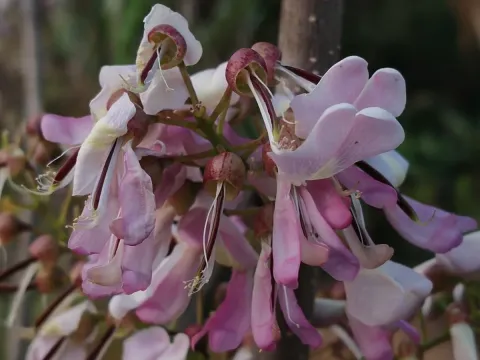
Gliricidia
Gliricidia
Gliricidia (Gliricidia sepium) is a fast-growing, nitrogen-fixing legume tree widely used in tropical agriculture. Propagation is typically performed either via seeds or vegetative cuttings, depending on the farming system and local climate.
What the section contains

Gliricidia
When using seeds, they should be sown in a nursery or directly into the field at the beginning of the rainy season to ensure optimal moisture levels for germination. Seeds are planted at a shallow depth of 1–2 cm.
Vegetative propagation is highly effective for this species. Hardwood cuttings, approximately 30–50 cm in length, are planted directly into the soil. This method is preferred for establishing living fences quickly.
Spacing depends on the intended use: for fodder production, trees are spaced at closer intervals, while for living fences or shade trees, they are spaced 0.5–2 meters apart to allow for proper crown development.
The species is highly resilient and establishes itself quickly, making it an excellent candidate for land reclamation and soil improvement projects in degraded areas.
Gliricidia thrives in tropical and subtropical regions with mean annual temperatures ranging between 20°C and 30°C. It is known for its remarkable tolerance to extended dry seasons lasting up to six months.
The plant is highly adaptable to various soil types, including sandy, stony, and relatively acidic soils. However, it requires well-drained conditions, as waterlogging can cause root damage and stunted growth.
Full sun exposure is necessary for vigorous growth and maximum leaf production. While it can survive in partial shade, its biomass yield significantly increases when it is exposed to direct sunlight.
Soil fertility can be managed easily with this crop; its ability to fix atmospheric nitrogen improves soil nutrient profiles, benefiting intercropped plants like cocoa, coffee, and vanilla.
Consistent management, particularly periodic pruning, is vital to maintain the tree in a vigorous state and encourage the production of nutrient-rich foliage suitable for agricultural needs.
Gliricidia is highly valued for its high biomass yield. Under proper management, it can produce 20–40 tons of dry matter per hectare annually, making it one of the most productive leguminous trees.
In fodder systems, the leaves are harvested as a protein-rich supplement for livestock. Studies show that Gliricidia forage can successfully replace a significant portion of expensive commercial feeds.
As green manure, the prunings provide an excellent source of nitrogen-rich organic matter. This application increases the nitrogen content of the soil, significantly boosting the yields of adjacent food crops.
The timber produced is dense and durable, commonly used for high-quality firewood, charcoal production, and sturdy fence posts, providing farmers with additional revenue streams.
The cumulative yield of this species—ranging from animal feed to fuel—makes it a corner-stone of sustainable integrated farming systems in its native and introduced range.
The plant is generally hardy, but it may be susceptible to fungal diseases such as powdery mildew, especially in humid conditions with poor air circulation, leading to leaf drop.
Insect pests, including various caterpillars and beetles, can cause localized defoliation. Regular monitoring is necessary to prevent significant damage during the peak growing season.
Root rot can occur if the trees are planted in sites prone to flooding. Proper site selection and drainage management are the most effective preventative measures against this issue.
While generally resistant, young seedlings can be vulnerable to weed competition. Early weeding is essential during the establishment phase to ensure the trees do not become suppressed.
Biological controls and maintaining a balanced agroforestry ecosystem are usually sufficient to manage pest levels without relying on heavy chemical interventions.
Harvesting for fodder or green manure involves regular pollarding or coppicing. Trees are typically cut back to a height of 50–100 cm, which encourages the development of new, succulent lateral shoots.
Seeds are harvested when the pods turn dark brown, just before they naturally dehisce. Careful timing is crucial to maximize seed recovery and minimize yield losses in the field.
Fodder foliage should be harvested and occasionally wilted before feeding to livestock to minimize the impact of anti-nutritional compounds present in fresh leaves.
Timber harvest involves selective cutting of older stems, allowing the tree to continue regrowing from the stump and providing a continuous supply of wood resources over many years.
The simple harvest techniques ensure that Gliricidia remains a low-cost, high-benefit crop for smallholder farmers looking to improve both soil and livestock productivity.