
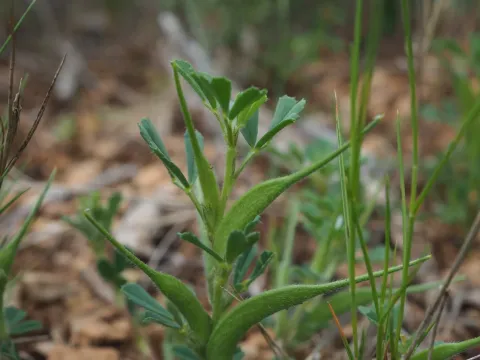
Gladiate fenugreek
Trigonella gladiata
Gladiate fenugreek (Trigonella gladiata) is an annual leguminous plant belonging to the Fabaceae family. Originating from the Mediterranean basin and Western Asia, this species has adapted to semi-arid climates where rainfall is often irregular during the growing season.
What the section contains
Gladiate fenugreek
The sowing process begins in early spring when soil temperatures reach stable levels suitable for germination. Proper spacing is essential to ensure adequate airflow between plants, which helps in reducing humidity-related diseases and promotes better development of the pods.
This crop thrives in well-drained, sandy or loamy soils that provide sufficient aeration. It is known for its remarkable drought tolerance, making it an excellent candidate for regions where water resources for irrigation are limited or costly to manage.
Soil pH levels should ideally range between neutral and slightly alkaline. The crop requires significant sunlight exposure and does not perform well in shaded areas, as light intensity is a primary factor influencing the accumulation of biomass and secondary metabolites.
The primary agricultural utility of Gladiate fenugreek lies in its high-quality forage production, which is highly palatable for livestock. Its ability to fix nitrogen in the soil also makes it a valuable component in crop rotation schemes, improving the fertility for subsequent crops.
Beyond forage, the seeds are harvested for their industrial and nutritional properties. Yield optimization depends heavily on maintaining the health of the plant during the flowering stage, ensuring that the plant allocates sufficient energy into pod filling rather than vegetative growth alone.
The plant is susceptible to common legume pests, such as aphids and various species of pod-boring insects. Monitoring for these pests during the vegetative and reproductive phases is crucial to preventing substantial losses in seed yield and overall crop health.
Fungal pathogens, including powdery mildew and root rot, can pose threats particularly in poorly drained environments. Implementing a rigorous crop rotation cycle and using certified disease-free seeds are the most effective management strategies for maintaining a healthy field.
Harvesting for seeds is typically conducted when the pods have turned brownish and the moisture content in the seeds decreases. Specialized combine settings are often required to handle the pods delicately, minimizing shattering and loss of harvestable grain during the field operation.
When intended for fodder, the plants are cut before full maturity to preserve nutritional quality. The harvested green mass should be processed shortly after cutting to ensure high-quality silage or hay, avoiding prolonged exposure to moisture that can lead to nutrient degradation.