
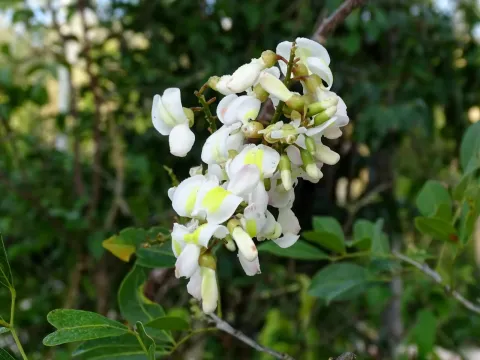
Gliricidia maculata
Gliricidia maculata
Seeds of Gliricidia maculata are typically sown at the beginning of the rainy season when soil moisture is sufficient for successful germination. Scarification of the seeds is highly recommended to break the seed coat and increase the percentage of germination.
What the section contains
Gliricidia maculata
For establishing live fences or windbreaks, the use of cuttings is a common practice. Cuttings should be 30–50 cm in length and planted directly into the soil at a depth of 10–15 cm, ensuring firm contact with the ground.
When using a nursery for seedling production before transplanting, it is crucial to maintain proper spacing between rows to avoid competition and ensure the development of a healthy root system.
The plant exhibits rapid growth during its first few months, providing farmers with quick access to plant material. However, it is important to monitor light levels for young plants during the initial weeks after transplanting.
This species is well-known for its excellent regenerative capacity after pruning, making it highly suitable for repeated biomass harvesting in various agroforestry systems.
Gliricidia maculata belongs to the Fabaceae family and is highly valued for its adaptability to diverse tropical environments. It is a fast-growing tree or large shrub native to Central and South America.
The crop prefers well-drained soils but shows significant tolerance to temporary waterlogging and even poor, degraded soils. Due to its symbiotic relationship with nitrogen-fixing bacteria, it effectively enriches the soil with nitrogen.
The optimal temperature range for growth is between 20–30 degrees Celsius. Gliricidia is sensitive to frost, which limits its cultivation exclusively to tropical and subtropical climatic zones.
The plant demonstrates high drought tolerance, making it indispensable in regions with a distinct dry season. During these periods, the tree often sheds its leaves to maintain root viability.
Full sunlight is essential for optimal development. In heavily shaded conditions, growth rates decrease significantly, and the efficiency of nitrogen fixation is noticeably reduced.
The main measure of Gliricidia productivity is its biomass yield, which is utilized as livestock fodder or organic green manure. High planting density allows for multiple harvests per year.
Green biomass yields can reach 10–20 tons per hectare annually when managed with intensive pruning schedules. Regular trimming stimulates new shoot formation and prevents the stems from becoming too lignified.
The leaves are characterized by a high protein content, making them a valuable supplement for ruminant diets. However, introduction into the diet should be gradual due to specific chemical compounds present in the foliage.
Beyond its use as fodder, the crop is an effective green manure. Mulching the soil with freshly harvested leaves significantly improves soil structure and enhances fertility over time.
The economic efficiency of this crop stems from low maintenance requirements and the longevity of the stands, which can remain productive for over a decade.
While generally robust, Gliricidia maculata can be affected by various fungal diseases in high-humidity conditions. Leaf spot diseases are among the most frequently observed issues in such environments.
Pests such as phytophagous insects, including caterpillars and certain beetles, can cause damage by feeding on young foliage. Severe infestations may lead to the defoliation of younger trees.
Root rot may occur due to water stagnation or poor soil aeration. To prevent this, ensuring proper drainage is vital, especially in areas with heavier clay soils.
In some regions, the plant is susceptible to root-knot nematodes, which weaken the root system and suppress general growth. Using resistant varieties and crop rotation are the recommended defense methods.
- Maintain proper spacing for better air circulation.
- Perform regular sanitary pruning of diseased branches.
- Disinfect cutting tools to prevent pathogen transmission.
Harvesting of green biomass is carried out through mechanical or manual pruning of branches. The optimal cutting height is 50–100 cm above the ground to facilitate rapid canopy regeneration.
When harvested for animal feed, it is advisable to collect the biomass before the flowering stage, when the concentration of nutrients in the leaves is at its peak.
For seed production, pods are harvested after reaching full maturity, when they turn brown and begin to dry out. Following harvest, the pods should be sun-dried and then threshed.
Stored seeds require cool and dry conditions to maintain viability for several months. They must be protected from stored product pests throughout the storage period.
During harvesting, it is important to use sharp, clean tools to minimize bark damage, which could otherwise serve as an entry point for various plant infections.