
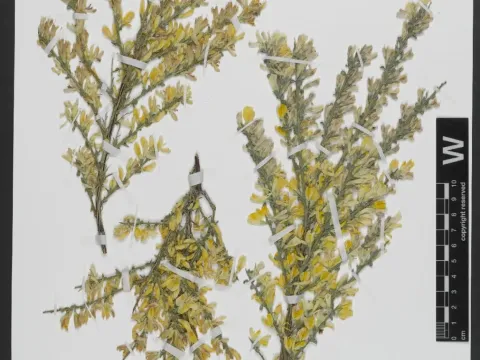
Genista versicolor
Genista versicolor
Genista versicolor is a perennial shrub belonging to the Fabaceae family. It is typically propagated via seeds or vegetative cuttings in agricultural and horticultural settings.
What the section contains
Genista versicolor
Seed sowing is best performed in early spring. Seeds require scarification to break dormancy and ensure uniform germination when planted in prepared, well-draining soil beds.
For nursery production, seeds are sown in a sandy, lightweight substrate at a depth of 0.5 to 1 cm. Maintaining consistent but moderate soil moisture is crucial during the germination phase.
Vegetative propagation is achieved using semi-hardwood cuttings taken during the mid-summer months. These cuttings are placed in a humid environment to promote root development before transplanting.
The crop grows slowly during its initial establishment phase, necessitating careful weed control to prevent competition for light and nutrients in the early years.
Genista versicolor is highly heliophilous and requires full sun exposure to flourish. Planting in shaded areas leads to leggy growth and significantly reduces floral output.
The shrub is well-adapted to poor-quality soils, including sandy and rocky substrates. Excellent drainage is non-negotiable, as the plant is highly susceptible to root rot in waterlogged conditions.
As a legume, this species maintains a symbiotic relationship with nitrogen-fixing bacteria, allowing it to thrive in nutrient-deficient soils without the need for intensive fertilization.
The plant demonstrates good drought tolerance once established, making it suitable for xeriscaping or areas where irrigation is limited or non-existent.
Standard horticultural maintenance includes light pruning after the flowering season to manage plant shape and encourage vigorous new growth for the subsequent year.
The primary use of Genista versicolor is ornamental, valued for its unique floral display where flowers shift in color, providing significant aesthetic interest in landscaping.
The plant serves as an effective melliferous resource. Its presence attracts bees and other beneficial pollinators, thereby enhancing the biodiversity and pollination success of the surrounding environment.
Due to its hardy root system, the shrub is widely utilized for phytoremediation and erosion control on slopes, where it stabilizes topsoil against wind and water damage.
While not a major commercial agricultural commodity, the species represents a sustainable choice for ground cover in reclaimed land and challenging terrain where other vegetation might fail.
The biomass production is moderate, but the ecological services provided by this species, such as nitrogen fixation and soil stabilization, are highly valued in sustainable land management.
Root rot and Fusarium wilt are the primary pathogens associated with this species, usually triggered by excessive moisture or poor soil drainage during the growing season.
Common pests include aphids and certain lepidopteran larvae that target fresh foliage. Integrated pest management, focusing on biological controls, is preferred over chemical interventions.
Rust fungi may manifest in stagnant or excessively humid microclimates. Proper spacing between individual plants is essential to ensure adequate air circulation and reduce disease risk.
In cases of extreme heat and prolonged drought, plants may occasionally attract spider mites, which can be mitigated through occasional washing or targeted acaricides if necessary.
Maintaining a dry, well-drained root environment is the most effective preventative measure against the majority of health issues affecting Genista versicolor.