
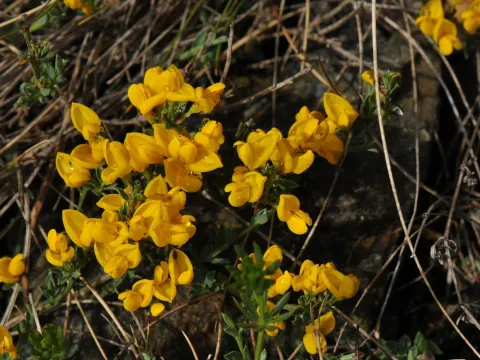
Genista millii
Genista millii
Genista millii is a distinct perennial shrub belonging to the Fabaceae family. Native to the eastern Mediterranean, this plant is well-adapted to harsh, arid environments and rocky outcrops where few other species can thrive.
What the section contains
Genista millii
The cultural requirements for this plant focus on excellent drainage. It performs best in poor, sandy, or stony soils with neutral to alkaline pH. Heavy, water-retaining soils must be amended to prevent the accumulation of moisture, which is the primary cause of plant failure.
As a xerophytic species, it demands full sun exposure to maintain its compact growth habit. It is highly drought-tolerant once established, thanks to its deep taproot system which allows it to access sub-surface water reserves during prolonged dry spells.
Botany-wise, the species is recognized by its densely branched, often pubescent stems that provide a silvery appearance. The foliage is sparse and small, an evolutionary adaptation that minimizes transpiration losses in hot, arid climates.
In terms of utilization, Genista millii is valued in sustainable landscaping for xeriscaping and erosion control on steep slopes. Its flowers provide an early-season nectar source, contributing to local biodiversity in arid garden designs.
Root rot is the most significant threat to the survival of this species. It is almost exclusively caused by poor drainage or overwatering. Maintaining a porous soil structure is the most effective preventative measure against fungal pathogens.
Spider mites are common pests that thrive during hot, dry weather. They cluster on the underside of leaves, causing yellowing and premature leaf drop. Regular moisture stress monitoring can help identify susceptible plants early.
Powdery mildew can affect the foliage if there is insufficient air circulation. Thinning out the branches and choosing a planting site with good natural airflow significantly reduces the risk of fungal spore germination.
Stem-boring insects may target weakened plants, excavating galleries within the woody tissues. Maintaining optimal plant vigor through minimal but consistent care is the best defense against these internal parasites.
Weed pressure in the early stages of establishment can lead to competition for nutrients and light. Clearing the area around the base of the shrub prevents micro-climates of excessive humidity that invite pests and diseases.