
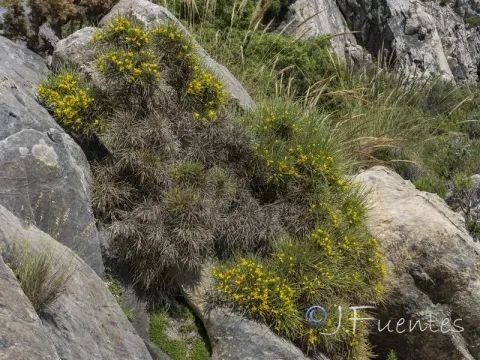
Genista haenseleri
Genista haenseleri
Genista haenseleri is a perennial shrub belonging to the Fabaceae family, native to the rugged terrains of the Iberian Peninsula. It is highly valued for its adaptation to arid and semi-arid Mediterranean environments where other vegetation struggles to survive.
What the section contains
Genista haenseleri
The plant thrives in well-drained, nutrient-poor, and calcareous soils. It requires full sun exposure to maintain its compact growth habit and to trigger the profuse yellow flowering that characterizes the species during the spring months.
Botanically, it features a complex system of woody branches with minimized foliage to reduce transpiration. This morphological adaptation allows the plant to survive in environments with limited water availability for extended periods of time.
From an agricultural standpoint, this shrub is utilized in soil conservation programs, particularly for stabilizing slopes against erosion. As a legume, it contributes to soil health through symbiotic nitrogen fixation, enriching the ground where it is planted.
Cultural requirements are minimal, as the species is hardy and does not require frequent irrigation or intensive fertilization. It is best suited for climates with mild, wet winters and hot, dry summers, mirroring its native habitat.
The primary threats to Genista haenseleri involve fungal pathogens, particularly root rot, which typically occurs when the soil remains waterlogged for too long. Proper drainage management is critical for the long-term health of the crop.
Insect pests, including aphids and leaf-eating beetles, can cause significant damage during the peak growing season. Implementing integrated pest management strategies is recommended to maintain the aesthetic and physiological vigor of the plants.
Powdery mildew represents a recurring issue in conditions with high humidity and poor air circulation. Thinning out the branches periodically helps to improve airflow and significantly reduces the incidence of fungal outbreaks.
Nematode infestations in the root zone may occasionally occur, especially in soils that were previously used for other susceptible crops. Crop rotation and using disease-free planting stock are essential preventative measures.
Lastly, mechanical damage caused by improper weeding techniques can create entry points for soil-borne pathogens. Using organic mulching is a preferred method to suppress weeds while protecting the shallow root system of the shrub.