
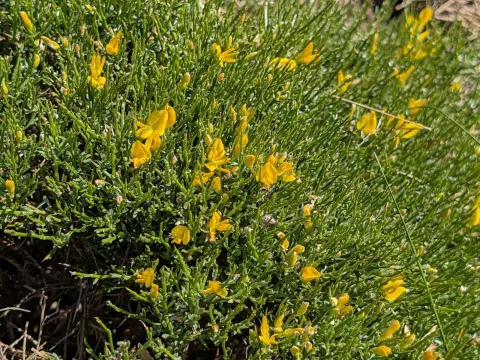
Genista lobelii
Genista lobelii
Genista lobelii is a perennial shrub belonging to the Fabaceae family, native to the Mediterranean region and parts of Southern Europe. This plant is well-known for its compact, cushion-like growth habit and spiny, intricate branch structure.
What the section contains
Genista lobelii
Botanically, it is classified as a xerophytic plant, perfectly adapted to hot and dry environments. Its small leaves and dense branching help reduce moisture loss, making it an excellent candidate for water-wise landscaping.
Regarding soil requirements, Genista lobelii demands excellent drainage. It thrives in gravelly, sandy, or rocky soil types that mimic its natural habitat. Heavy soils that retain moisture will likely cause root system failure.
The plant requires full sun exposure to maintain its dense, spherical shape. Any degree of shade will cause the plant to become leggy, losing its architectural appeal and potentially reducing its flowering intensity.
The culture is sensitive to extreme cold and excessive humidity. In regions with freezing winters, it is necessary to plant it in a sheltered spot with southern exposure to protect the root crown from severe frost.
Root rot is the primary physiological and pathological threat to Genista lobelii. It occurs almost exclusively in environments with poor soil drainage or excessive irrigation, leading to rapid decay of the vascular tissues.
Spider mites are the most significant insect pest for this species. They thrive in dry, hot conditions, frequently attacking the foliage and causing the plant to lose its vibrant green color and eventually succumb to stress.
Aphids can frequently colonize the tender tips of new growth during the spring season. While they rarely kill the plant outright, their activity can significantly reduce the annual flower output and overall vigor.
Powdery mildew may develop during periods of high atmospheric humidity and stagnant air. Proper spacing during initial planting is the most effective preventative measure to ensure good ventilation for the canopy.
Regular sanitation, such as the removal of dead or diseased branches after the flowering season, helps in preventing the buildup of fungal spores and keeps the plant in a healthy condition for the next growing cycle.