
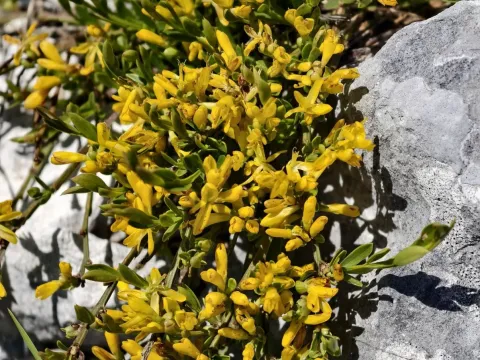
Genista januensis
Genista januensis
Genista januensis, commonly known as the Genoese broom, is a perennial shrub belonging to the Fabaceae family. It is widely recognized for its low-growing habit and vivid yellow flowers.
What the section contains
Genista januensis
The plant originates from Southern Europe and is well-adapted to Mediterranean-like conditions. It thrives in full sun and requires well-draining, rocky, or sandy soils to prevent moisture-related stress.
Botanically, it is characterized by its winged stems and small lanceolate leaves. Its growth pattern is prostrate, making it an excellent candidate for covering bare patches of soil or stabilizing slopes.
The cultural requirements include a temperate climate with mild winters. While it is quite hardy, it demands excellent drainage; saturated soil during winter months can be detrimental to the plant's survival.
In terms of хозяйственное usage, it is primarily used in landscape design. Its ability to thrive in poor soils makes it perfect for rock gardens, terraced landscapes, and erosion control projects.
The most significant threats to Genista januensis are fungal pathogens, specifically those causing root rot. These occur predominantly in poorly drained soils or during periods of prolonged rainfall.
Insect pests, such as aphids and spider mites, can cause damage to the tender growth tips. These pests are more prevalent in hot, dry weather conditions, stressing the plant further.
Prevention of these threats is centered on proper site selection. Ensuring the soil structure is porous and avoiding excessive irrigation are the primary ways to minimize the risk of root diseases.
Monitoring the plants during the growing season is essential for early detection of pests. Integrated pest management, including the use of neem oil or soft soaps, is recommended for minor infestations.
General maintenance, including pruning away dead or crossing branches, promotes better airflow through the canopy, which effectively reduces the humidity trapped inside the foliage, discouraging fungal growth.