
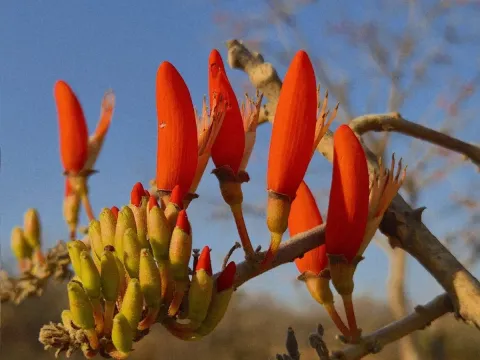
Corky coral tree
Erythrina suberosa
Erythrina suberosa, commonly known as the Corky coral tree, belongs to the Fabaceae family. This deciduous species is native to tropical forests in India, Myanmar, and surrounding regions.
What the section contains
Corky coral tree
The tree thrives in hot tropical environments, displaying remarkable adaptation to long dry seasons. It is highly valued in arid regions for its ability to maintain growth where other crops fail.
Ideal soil conditions include well-drained loamy or sandy soils. Waterlogged conditions are detrimental to the plant, so adequate drainage must be prioritized in all planting layouts.
As a member of the legume family, it improves soil fertility by fixing atmospheric nitrogen. This ecological trait makes it an excellent choice for agroforestry systems alongside shade-loving crops.
Full sun exposure is crucial for the development of the canopy and flower production. It is a heliophilous species, meaning it requires open spaces to achieve its maximum biomass potential.
The wood of Erythrina suberosa is exceptionally light, porous, and soft. Due to its buoyancy, it has been historically favored for manufacturing fishing net floats and light packaging materials.
The foliage serves as a vital forage resource for livestock. In regions where drought limits grass growth, the leaves and tender twigs are harvested to supplement animal nutrition.
In ornamental landscaping, this tree is prized for its spectacular display of crimson flowers that bloom on leafless branches, creating a striking visual contrast in dry gardens.
The fiber extracted from the inner bark is used for artisanal production of ropes and paper. This highlights the tree's contribution to local rural livelihoods and traditional handicrafts.
Beyond material benefits, the tree functions as an erosion control agent. Its deep rooting system stabilizes hillside slopes, preventing topsoil loss in tropical agricultural systems.
Defoliating insects and caterpillars are common pests that target the leaves. Integrated pest management, including monitoring and biological control, is necessary to maintain foliage health.
Root rot and collar rot can occur if soil aeration is compromised. Maintaining a dry zone around the base and ensuring proper soil structure are essential preventative measures.
Fungal infections, such as leaf spot, may appear during unusually wet periods. Proper spacing between trees helps maintain airflow, reducing the risk of rapid pathogen transmission.
Wood-boring beetles can weaken the stems of trees already suffering from environmental stress. Maintaining optimal tree vigor is the primary defense against such infestations.
Regular sanitation of the plantation, including the prompt removal of decaying or infected branches, is recommended to keep the overall tree population healthy and productive.