
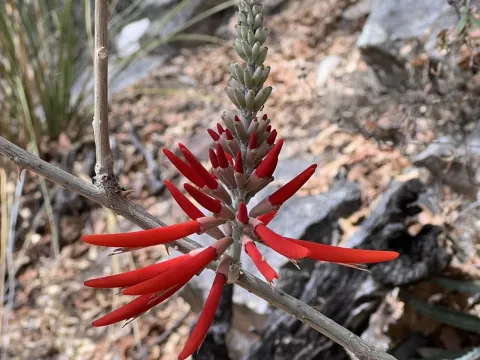
Coral bean
Erythrina flabelliformis
Propagation of Erythrina flabelliformis begins with seed collection, which should be done when pods are fully mature and turn brown during the dry season.
What the section contains
Coral bean
Seeds require scarification to break dormancy, followed by soaking in warm water for at least 12 hours prior to planting to ensure even germination.
The optimal sowing mix should be sandy and highly porous to prevent seedling death caused by fungal pathogens common in stagnant, wet soils.
Plants should be kept in a greenhouse or warm nursery environment for the first 12 months, allowing the root system to become robust before field transplantation.
During the nursery stage, avoid excessive fertilization, as this can lead to weak, elongated growth that may struggle once exposed to outdoor conditions.
Erythrina flabelliformis, a member of the Fabaceae family, is a deciduous shrub characterized by its brilliant red, fan-shaped clusters of flowers.
It is natively found in dry, rocky desert environments, making it highly drought-tolerant and well-suited for xeriscaping or low-water agriculture.
The plant thrives in full, intense sunlight, which is necessary to induce flowering and maintain the compact, shrubby growth habit desired in cultivation.
Soil requirements include excellent drainage and a neutral to slightly alkaline pH, which mirrors the alkaline mineral soils of its native habitat.
Temperature management is crucial, as the plant is sensitive to frost and thrives best in zones where temperatures remain well above freezing throughout the year.
Spider mites are the most common pest observed in field populations, especially during periods of extreme heat and prolonged lack of precipitation.
Root rot is a critical threat, usually stemming from poor drainage or improper irrigation scheduling that keeps the root ball wet for extended periods.
Scale insects can occasionally infest branches, creating honeydew that leads to secondary sooty mold growth, which inhibits photosynthesis.
Integrated pest management strategies focusing on beneficial predatory insects are highly effective for maintaining health in arid zone plantings.
Early identification of signs like yellowing leaves or wilting is essential for implementing remediation steps before the damage becomes irreversible.