
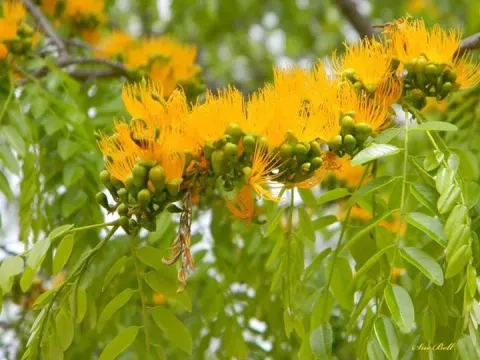
Cordyla
Cordyla
Cordyla is a genus of tropical trees belonging to the Fabaceae family. Native primarily to the African continent and Madagascar, these trees are recognized for their distinct botanical structure and ecological adaptability to tropical climates.
What the section contains


Cordyla
The cultivation of Cordyla requires regions with consistently high temperatures and a well-defined rainfall pattern. The species performs best in deep, well-drained loamy soils, which allow the root system to penetrate deeply without the risk of waterlogging.
Botanically, these trees are distinguished by their odd-pinnate leaves and striking flowers that lack traditional petals, instead showcasing dense tufts of stamens. This unique morphology makes the tree both a timber resource and an aesthetic addition to agroforestry systems.
Agrotechnical management focuses on ensuring young saplings are protected from excessive wind and competition with invasive weeds. As the trees mature, they become remarkably resilient, though periodic pruning is often required to maintain desired wood quality.
The wood harvested from Cordyla is highly regarded in local economies due to its density and durability. It is extensively utilized in carpentry, the manufacturing of high-quality furniture, and for heavy-duty structural applications where resistance to pests is required.
Major threats to Cordyla include infestations by wood-boring insects, which can compromise the integrity of the timber. Integrated pest management strategies are often implemented to monitor and mitigate the population of these destructive insects.
Fungal infections represent another significant challenge, particularly in humid environments where air circulation is restricted. Preventive measures involve spacing trees correctly and ensuring optimal soil drainage to prevent pathogens from establishing in the root zone.