
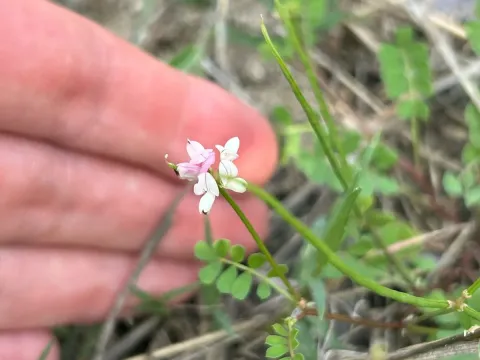
Coronilla cretica
Coronilla cretica
Coronilla cretica is a perennial leguminous herb that establishes itself primarily through seeds during the early spring. It is essential to sow in well-prepared, friable soil to ensure that the small seeds establish strong contact with the substrate, promoting uniform germination.
What the section contains
Coronilla cretica
The planting depth should be shallow, generally between 1 and 2 centimeters, as deeper burial may prevent the emergence of sprouts. After sowing, light rolling is recommended to compact the soil and maintain soil moisture levels necessary for initial development.
During the first year, the crop focuses on root development and slow vegetative growth, requiring meticulous weed control to prevent competitive pressure. Once established, the root system becomes robust and drought-tolerant.
Row spacing should be calibrated to facilitate potential maintenance or, in the case of mixed meadows, to allow compatible species to occupy the space efficiently. Proper density management is crucial for optimal long-term yields.
Once established, the crop is capable of rapid regrowth after harvest, making it an excellent candidate for multi-cut systems, provided that environmental conditions remain favorable throughout the growing season.
This species thrives in well-drained soils and shows a preference for sunny, open locations. It is well-adapted to the Mediterranean climate, displaying high resilience to periods of limited water availability, which is a key trait for sustainable agriculture.
Regarding soil, it performs best in neutral to slightly alkaline environments. It is highly sensitive to waterlogging; therefore, avoiding low-lying fields or areas with poor drainage is imperative to prevent root rot and plant decay.
Coronilla cretica functions as a nitrogen-fixing plant due to its symbiotic relationship with rhizobia bacteria. This biological process significantly reduces the need for synthetic nitrogen fertilizers, making it a cost-effective and environmentally friendly option for farmers.
Balanced fertilization focusing on phosphorus and potassium is advised to encourage structural strength and overall plant health. While nitrogen requirements are minimal, supplemental micronutrients can enhance biomass production and quality.
The plant demonstrates good frost resistance, allowing it to survive winter conditions and recover rapidly when temperatures rise in the spring. This longevity makes it a valuable component in permanent forage stands.
The primary threats to this culture include fungal pathogens, such as powdery mildew and various leaf spot diseases, which typically flourish under conditions of high humidity or poor air circulation within the canopy.
Pest pressure is often linked to insects that damage both the vegetative parts and the flowers, potentially reducing seed production. Integrated pest management strategies are highly recommended to mitigate these risks.
Proper field management, including the removal of debris and maintaining adequate spacing, helps to decrease the micro-climate humidity that favors disease development. Healthy plants are generally better equipped to resist minor pest infestations.
Monitoring the field during peak growth phases is essential for the early detection of stress factors. By identifying symptoms of root disease or pest activity, growers can implement timely measures before damage impacts the entire crop.
Utilizing high-quality, certified seeds and adhering to strict crop rotation practices are fundamental to minimizing the accumulation of soil-borne pathogens and ensuring the long-term productivity of the agricultural field.