
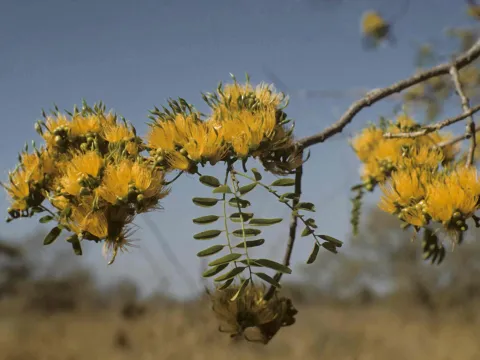
Cordyla
Cordyla Lour.
The genus Cordyla (Cordyla) belongs to the Fabaceae (legume) family. These are large trees characterized by their distinctive biological structures and their role in tropical forest ecosystems.
What the section contains

Cordyla
Originating from the tropical regions of Africa, these trees thrive in warm environments with high humidity. They are widely distributed across various habitats, ranging from dense forests to woodland savannas.
Cordyla requires deep, fertile, and well-drained soils for optimal development. It does not tolerate prolonged waterlogging or frost, which are critical constraints for commercial cultivation outside its native range.
Agricultural management involves careful site selection and the provision of adequate spacing between trees to ensure proper crown development and access to sunlight. Irrigation is vital during the establishment phase.
The economic utility of Cordyla is significant, primarily due to the high density and durability of its timber. In addition to wood production, certain species are utilized in traditional agroforestry systems for their edible fruits.
The primary threats to Cordyla include wood-boring insects, which can severely compromise the structural integrity of the timber if left unmanaged.
Fungal pathogens associated with damp soil conditions are a major concern, often leading to root decay if drainage protocols are not strictly followed during site preparation.
Leaf-feeding insects frequently cause defoliation in young nursery plants, necessitated by the need for regular monitoring and integrated pest management strategies.
Poor site sanitation can exacerbate the spread of diseases, making regular inspection of the plantation an essential task for any grower or agricultural manager.
Overharvesting and land conversion represent significant threats to wild populations, emphasizing the importance of sustainable cultivation practices to ensure the species' survival.