
Coral tree
Erythrina corallodendron
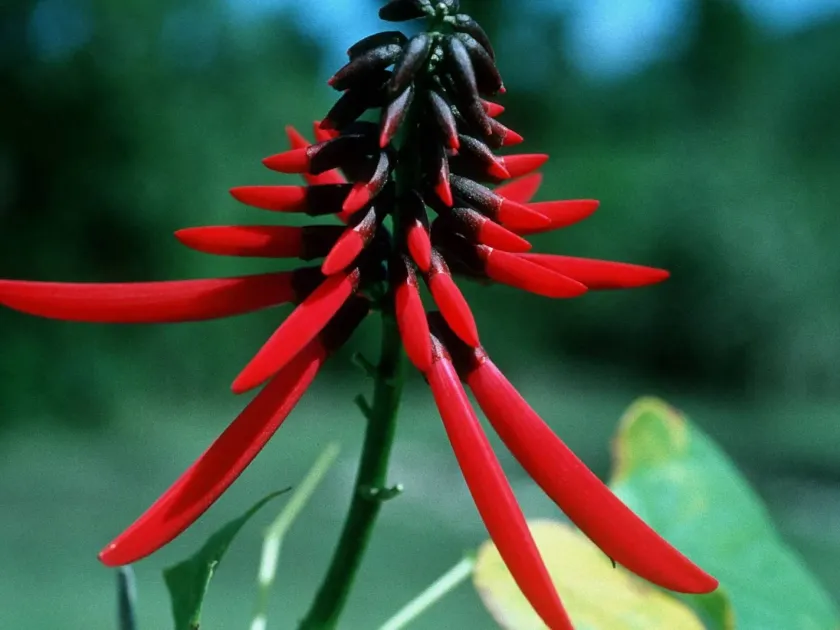
Description
Growing requirements
The coral tree (Erythrina corallodendron) is a perennial woody plant belonging to the Fabaceae family. Known for its striking red, coral-shaped flowers, this species often serves as a focal point in tropical and subtropical landscapes.
Originating from the Caribbean and parts of South America, this plant is adapted to tropical climates where temperatures remain consistently warm throughout the year. It requires full sun exposure to flourish and produce its distinctive blossoms.
In terms of soil requirements, the coral tree thrives in well-drained, fertile soil. While it is relatively drought-tolerant once established, it prefers consistent moisture during its active growth period to support its rapid development.
Agricultural practices involve proper site selection to avoid areas prone to waterlogging. Planting on raised beds or slopes is recommended in regions with high rainfall to prevent root damage and promote better oxygenation of the root zone.
The plant is highly valued for its ability to fix atmospheric nitrogen through symbiosis with root bacteria. This makes it an excellent choice for agroforestry systems aimed at enhancing soil fertility for secondary crops.
Main diseases and pests
Common pests include spider mites and aphids, which frequently infest the foliage, particularly during dry seasons. Regular monitoring and the application of horticultural oils or specialized insecticides are effective control measures.
Root rot and stem fungal infections represent the most significant threats to plant health. These are usually triggered by excessive irrigation or poorly structured soil that inhibits proper water drainage and root respiration.
Leaf spot diseases, caused by various fungal pathogens, may emerge during periods of high humidity. Improving airflow by pruning excessive branches helps reduce the risk of such infections spreading throughout the canopy.
Borer insects can damage the internal structure of the stems and trunks. Preventing borer infestation involves maintaining the tree's overall health and vigor, which naturally increases its resistance to these wood-boring pests.
Integrated pest management strategies should prioritize the use of biological controls to maintain the ecosystem balance, ensuring that chemical interventions are only used as a last resort in severe cases.