
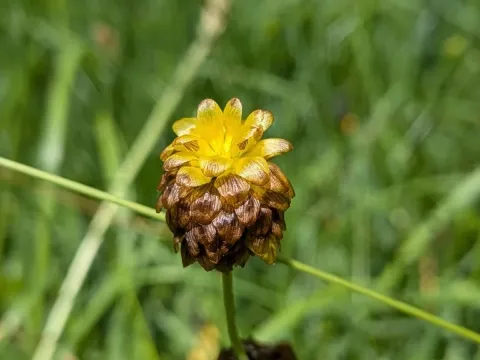
Brown clover
Trifolium badium
Brown clover (Trifolium badium) is a perennial herbaceous plant belonging to the Fabaceae family. In its natural habitat, it propagates primarily through seeds that require winter stratification for optimal germination.
What the section contains
Brown clover
The optimal sowing time for this crop is early spring, once the soil has warmed up to 5-8 degrees Celsius. Seeds should be sown at a shallow depth of 1-2 centimeters to ensure access to sufficient light and moisture.
For establishing a new stand, it is often recommended to sow the clover under a cover crop of grasses. This helps in stabilizing the young plants and provides protection during their initial development phase.
Seed rates vary depending on the intended use of the land, typically ranging from 10 to 15 kilograms per hectare. Proper seedbed preparation is crucial to ensure good contact between seeds and the soil.
Autumn sowing is only feasible in regions with mild winters to allow the plants enough time to establish their root systems before the onset of hard frost conditions.
As a species adapted to subalpine and alpine environments, brown clover thrives in cool and humid climates. It is highly sensitive to extreme heat and prolonged summer droughts, which can stunt its growth.
The plant prefers well-drained, loamy, or sandy-loam soils with a slightly acidic to neutral pH level. It does not tolerate waterlogging, as the roots require good aeration to function effectively.
Brown clover exhibits excellent cold tolerance, allowing it to survive at higher altitudes and in regions with long, harsh winters. It is a robust plant once it has successfully established.
Sunlight requirements are significant; the plant performs best in open areas with full exposure to light. Excessive shading leads to reduced vigor and a decline in overall green mass production.
Balanced fertilization, particularly with phosphorus and potassium, is recommended to support root development and enhance the nitrogen-fixing capabilities of the plant through symbiotic bacteria.
Yield potential of brown clover is strongly influenced by altitude and local soil fertility. In managed grassland ecosystems, it contributes significantly to the total biomass production.
The primary agricultural use of this clover is as high-quality forage. It is highly palatable to various livestock species, including sheep, goats, and cattle, providing essential nutrients and proteins.
In well-managed pastures, the yield can reach 150-200 decitonnes of green mass per hectare. When included in hay mixtures, it improves the nutritional profile of the stored winter fodder.
Using brown clover in crop rotation cycles helps improve soil structure and fertility due to its ability to fix atmospheric nitrogen, benefiting the following cereal or vegetable crops.
Periodic mowing or grazing management is necessary to maintain the productivity of the stand and prevent the invasion of less desirable weed species into the clover sward.
Brown clover is susceptible to several fungal diseases, including rust and various leaf spot pathogens, especially during periods of high humidity and rainfall.
Insects such as clover weevils and nematodes can cause significant damage to the roots and reproductive organs. Integrated pest management strategies are recommended to mitigate these risks.
Overgrazing is a major threat to the survival of the stand. It causes physical damage to the plants and leads to soil compaction, which hinders the clover's ability to regenerate effectively.
Weed competition can be intense during the establishment year. Maintaining a healthy, dense sward is the best natural defense against invasive weeds and opportunistic grasses.
To prevent disease outbreaks, farmers should ensure proper air circulation through timely harvesting and avoid excessive nitrogen fertilizer applications that might weaken plant tissue.
The optimal harvest time for hay is during the peak flowering stage. Harvesting at this point ensures the highest nutritional content, as the stems are still tender and rich in proteins.
Care must be taken during the drying process to prevent the loss of leaves, which are the most nutrient-dense part of the plant. Mechanical handling should be kept to a minimum.
Seed collection is conducted in late summer when the flower heads turn brown. Seeds must be gathered promptly to prevent natural shedding due to pod shattering.
Post-harvest cleaning is essential to remove chaff and impurities from the seed lot. Storing the seeds in a dry, cool place will maintain high germination rates for future seasons.
For grazing management, it is important to allow adequate recovery time between cycles, typically 30-40 days, to ensure that the clover has enough energy reserves to regrow.