
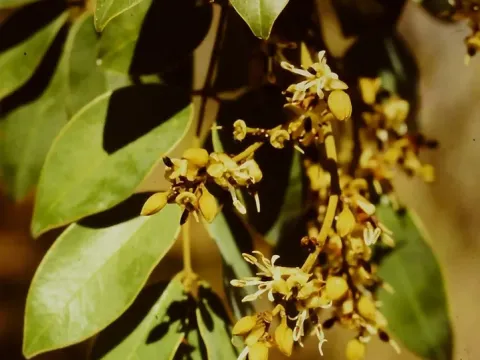
Dialium englerianum
Dialium englerianum
Dialium englerianum is a notable tree species belonging to the legume family (Fabaceae), primarily found in the savanna regions of Southern Africa. It is highly valued for its edible fruit, which plays a crucial role in local nutrition and biodiversity.
What the section contains
Dialium englerianum
The tree thrives in well-drained, sandy soils that allow for deep root penetration, essential for surviving the dry seasons characteristic of its native habitat. It is a slow-growing species that requires patience during the early establishment phase of cultivation.
Regarding climate, Dialium englerianum demands full sun exposure to flourish and maximize fruit production. It is well-adapted to high-temperature environments and can endure extended periods of drought once the root system has matured.
Agricultural practices for this species focus on providing adequate spacing to avoid competition for resources. As the tree matures, its water requirements drop significantly, making it a suitable candidate for sustainable agroforestry projects in arid areas.
Economically, the tree is utilized for its nutritious, tangy fruit, which is often harvested from the wild or managed semi-cultivated stands. Furthermore, the timber is prized by local communities for making durable household tools and construction materials.
Pests represent a major challenge for the production of Dialium englerianum, particularly seed-boring beetles that target developing fruits. These insects can significantly reduce the viability of seeds and the overall yield of the harvest.
Fungal diseases affecting the bark and branches are more prevalent in humid environments or areas with poor air circulation. Proper pruning and site selection are critical to maintaining the health of the tree's canopy.
Parasitic plants, especially mistletoe species, frequently attach themselves to the branches, absorbing nutrients from the host and causing significant stress to the tree. Manual removal of these parasites is recommended to prevent canopy damage.
Mechanical injuries to the trunk, often caused by livestock or human activity, can lead to rot and structural weakness. Protecting the base of young trees is an essential part of plantation management.
Nutrient imbalances in the soil can lead to physiological stress, making the tree more susceptible to opportunistic pathogens. Regular soil monitoring and the use of organic amendments are key to ensuring long-term vigor.