
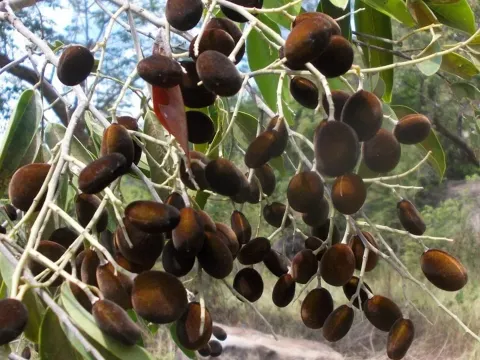
Dialium ovoideum
Dialium ovoideum
Dialium ovoideum, commonly known as a type of velvet tamarind, belongs to the Fabaceae family, specifically the subfamily Caesalpinioideae. This evergreen tree is native to the coastal forests of East Africa, thriving in humid, tropical climates that offer stable temperatures throughout the year.
What the section contains
Dialium ovoideum
To cultivate this crop successfully, growers must provide well-drained soil rich in organic matter. While the tree is hardy once established, it requires protection from waterlogging during the early stages of growth, as its root system is susceptible to decay in heavy, saturated soils.
The plant demonstrates a preference for sunny locations, which are essential for robust flowering and subsequent fruit production. Adequate spacing between trees is critical to ensure proper air circulation, which helps mitigate the risk of fungal infections within the dense canopy.
Agricultural management includes routine mulching and the application of balanced organic fertilizers to sustain high growth rates. Since it is a legume, it performs a natural nitrogen-fixing function, which contributes significantly to soil fertility when integrated into agroforestry systems.
Propagation is typically done through seeds, though vegetative techniques are being explored to ensure genetic consistency in commercial plantations. Farmers should monitor the soil moisture levels regularly, especially during the dry season, to maintain the health of young saplings.
The primary economic output of Dialium ovoideum is its fruit. The pulp surrounding the seeds is edible, possessing a distinct sweet-and-sour flavor. It is consumed fresh or processed into refreshing beverages and traditional snacks, providing significant nutritional value including vitamins and antioxidants.
Beyond its culinary utility, the wood of the tree is highly valued for its durability and hardness. It is frequently harvested for the construction of tools, agricultural implements, and high-quality furniture that demands resistance to wear and tear.
The tree serves as an excellent component for sustainable land management. Its ability to provide shade for shade-grown crops, combined with its nitrogen-fixing capabilities, makes it an ideal candidate for polyculture farming systems in tropical regions.
Harvesting is typically conducted manually once the fruits reach maturity, signaled by a dry, brittle shell. Collectors must be careful to avoid damaging the branches, as the wood is prone to brittle fractures if handled improperly during the collection process.
With increasing interest in underutilized tropical crops, the market demand for Dialium products is expanding. Proper post-harvest handling, including sorting and moisture control, is essential for maintaining fruit quality for local and regional markets.