
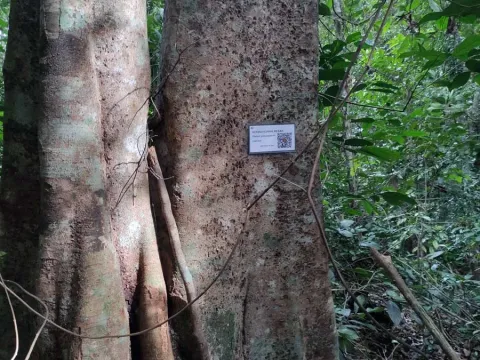
Dialium platysepalum
Dialium platysepalum
Dialium platysepalum is a prominent member of the Fabaceae family, specifically classified within the Detarioideae subfamily. It is native to the lowland rainforests of Southeast Asia, where it contributes to the complex structure of high-canopy ecosystems.
What the section contains
Dialium platysepalum
The species thrives under strictly tropical conditions, necessitating consistent high temperatures and significant annual precipitation. It is highly sensitive to water stress, making it unsuitable for regions with a distinct or prolonged dry season.
Soil requirements include deep, nutrient-rich, and well-drained substrates. While the plant can establish itself in varied soil types, it performs best on acidic to neutral alluvial soils, utilizing its nitrogen-fixing capabilities to survive in competitive forest environments.
During the early developmental stages, saplings require partial shade to mimic the conditions of the understory. As the tree matures, it transitions into a light-demanding species, often reaching the upper canopy of the rainforest.
The botanical structure is characterized by a sturdy, straight trunk and broad, evergreen leaves, which support high rates of photosynthesis throughout the year in the equatorial climate.
The primary economic focus of Dialium platysepalum is the production of high-density, durable timber. This wood is highly valued in the construction of heavy-duty furniture, flooring, and exterior structural components due to its inherent resistance to decay.
Harvesting strategies are typically regulated to ensure sustainable management. Given the tree's slow growth rate, rotational harvesting cycles are employed to maintain the ecological balance of the plantation or forest area.
Apart from timber, the fruit of the tree provides a secondary resource. The pulp surrounding the seeds is often harvested for local consumption, adding nutritional value and secondary income streams for local stakeholders.
Post-harvest management is critical; the dense nature of the wood requires careful seasoning to prevent cracking and warping. Specialized milling equipment is usually required due to the extreme hardness of the heartwood.
Ongoing research into the silviculture of Dialium species is aimed at increasing yield efficiency while promoting biodiversity, ensuring that the industry remains viable for future generations.