
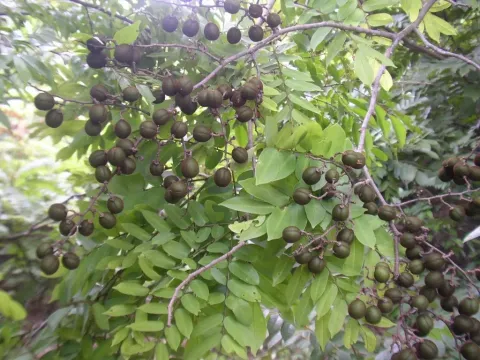
Dialium dinklagei
Dialium dinklagei
Dialium dinklagei is a notable evergreen tree species belonging to the Fabaceae family. Native to the tropical rainforests of West Africa, it thrives in regions characterized by consistent warmth and high annual rainfall levels.
What the section contains
Dialium dinklagei
The tree requires deep, fertile, and well-drained soils to reach its full development potential. Its natural habitat includes low-lying forested areas where the soil maintains adequate moisture levels throughout the majority of the year.
Botanically, it features pinnately compound leaves and small, fruit-bearing structures that are highly regarded for their unique edible properties. The tree species is adapted to survive under a closed forest canopy, making it a shade-tolerant plant during its early growth stages.
Agricultural practices for this species focus on site selection and moisture management. Implementing organic mulching and soil improvement techniques is recommended to foster healthy root systems and overall plant vigor.
Successful cultivation depends on maintaining high humidity levels and preventing excessive soil compaction. Providing adequate spacing between trees is crucial to allow for crown development and minimize competition for vital nutrients.
The timber of Dialium dinklagei is recognized for its durability, hardness, and resistance to environmental stress. This makes it a preferred material for specialized carpentry, high-quality furniture making, and local construction projects.
The fruit of the tree plays a vital role in local subsistence, providing a nutrient-rich food source for communities within its range. The pulp surrounding the seeds is frequently consumed fresh or processed into traditional beverages and spreads.
Ethnobotanical records indicate that various parts of the tree are used in traditional healing practices. Modern research continues to explore the phytochemical properties of its bark and leaves for potential applications in the cosmetic and medical industries.
Harvesting timing is strictly dictated by the tree's phenological cycle, with fruits collected shortly after reaching maturity to ensure optimal quality. Post-harvest storage should involve cool, airy environments to prevent fungal degradation.
Incorporating Dialium dinklagei into agroforestry programs serves as a strategy for land restoration and biodiversity preservation. By promoting its growth, farmers contribute to the stabilization of soil structure and the support of local ecosystems.