
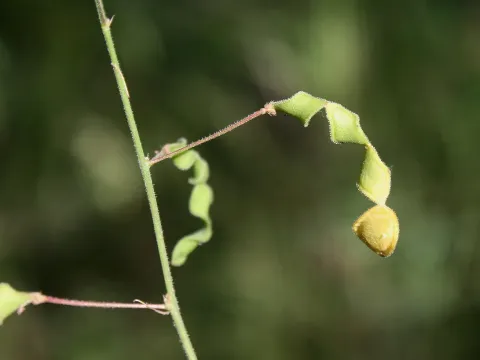
Desmodium ospriostreblum
Desmodium ospriostreblum
Desmodium ospriostreblum is a perennial legume belonging to the Fabaceae family. It is recognized in tropical and subtropical agriculture as a valuable forage plant known for its ability to thrive in varied environmental conditions.
What the section contains
Desmodium ospriostreblum
The sowing season is strictly dictated by the onset of the rainy season, as the seeds require consistent moisture for successful germination. Planting usually occurs when soil temperatures are stable, typically above 20 degrees Celsius.
Seed scarification is highly recommended prior to planting to overcome physical dormancy and increase the germination rate. Seeds should be planted at a shallow depth of 1 to 2 centimeters to ensure healthy sprout development.
Initial growth of this crop is relatively slow, making it vulnerable to competition from aggressive weeds. Careful site selection and initial manual or mechanical weeding are essential to allow the crop to establish itself.
Planting density varies based on the intended use; higher densities are used for biomass production, while lower densities are sufficient when intercropping with other grasses or forestry species.
The species performs best in well-drained soils with a neutral or slightly acidic pH. Excessive soil moisture and waterlogging can lead to root system decay, making proper land drainage a prerequisite for successful cultivation.
Desmodium ospriostreblum is highly sensitive to frost, which limits its commercial cultivation to frost-free regions. It is well-adapted to high-temperature environments where moisture is adequate during the growing season.
While the plant can tolerate partial shade, it reaches its maximum biomass potential under full sunlight. This adaptability makes it an excellent candidate for inclusion in silvopastoral systems.
The plant benefits from nitrogen-fixing nodules, which improve soil fertility over time. However, on nutrient-deficient soils, the application of phosphorus and potassium fertilizers can significantly enhance overall yields.
Soil structure is critical for this species, as it requires loose, aerated ground to allow its taproot system to penetrate deeply, which also aids in drought resistance during short dry spells.
The primary use of Desmodium ospriostreblum is as a high-protein forage crop. It is highly palatable to ruminants and serves as a vital component of livestock diets in many tropical regions.
Productivity is measured by the total biomass harvested per year. Depending on rainfall and management intensity, multiple cuttings can be achieved throughout the growing season without exhausting the plant.
Nutritionally, the forage is rich in crude protein and minerals, helping to balance the energy intake of cattle and sheep. Consistent harvesting at the right stage ensures the highest possible quality for animal feed.
Beyond its use as fodder, the plant is a useful ground cover for erosion control. Its dense foliage and robust root system help bind the soil and prevent runoff on sloping agricultural lands.
Seed production is an important secondary objective. Successful seed yields depend on local pollinator populations, making the protection of beneficial insects essential for agricultural success.
Fungal diseases, often triggered by prolonged humidity and lack of air circulation in dense stands, are the most common health threats to Desmodium ospriostreblum. Leaf spots can reduce photosynthetic efficiency.
Leaf-eating insects, such as caterpillars and various beetles, are the primary pests. High infestation levels can quickly defoliate a field, significantly reducing the biomass available for harvest.
Root-knot nematodes may pose a threat in soils where the crop is grown continuously without rotation. These parasites stunt plant growth and reduce the plant's overall longevity.
Integrated pest management strategies, including the use of trap crops and crop rotation, are recommended to maintain field health and reduce the need for chemical interventions.
Early detection of infestations is crucial. Monitoring the field for visible signs of damage allows for timely management, which helps to preserve the crop's quality and ensures long-term viability.
Harvesting for fodder is best performed at the onset of the flowering phase. At this stage, the plant has optimized its nutrient profile, ensuring the highest content of protein for livestock consumption.
When producing hay, careful drying is required. Gentle handling during the drying process prevents the loss of leaves, which are the most nutrient-dense part of the plant, often detaching if handled too roughly.
Cutting height should be carefully managed to avoid damaging the plant's base, which allows for quicker regrowth. Proper machinery calibration is necessary to ensure a clean cut above the growth points.
For seed harvesting, timing is critical. Harvesting should take place when the seed pods have fully matured but before they naturally dehisce and scatter their seeds on the ground.
Post-harvest cleaning is essential to remove chaff and pod debris from the seed lot. Proper storage conditions, including cool and dry environments, are required to maintain high germination capacity for the next planting cycle.