
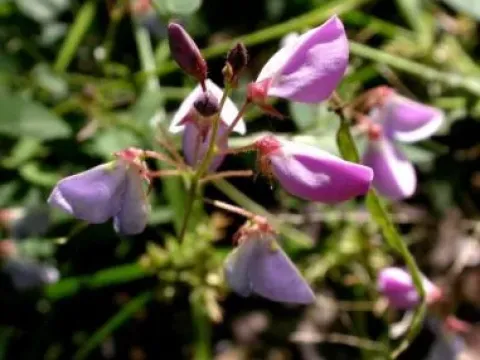
Desmodium praestans
Desmodium praestans
Sowing Desmodium praestans should be carried out during periods of stable soil warming, once the risk of spring frost has passed. For successful germination, the optimal substrate temperature should be at least 18–20 degrees Celsius.
What the section contains
Desmodium praestans
Field preparation begins with deep plowing and thorough leveling of the surface, as the seeds are of medium size and require firm soil contact. It is essential to ensure a weed-free environment during the initial growth stages.
The seeding rate depends on the planting method: for row seeding, it is approximately 10–12 kg per hectare. Seeds should be sown at a depth of no more than 2–3 centimeters to ensure uniform emergence.
Pre-sowing scarification is often practiced to accelerate germination, as the seed coat of many legumes in this group possesses high hardness. This practice increases germination energy and ensures a more consistent stand development.
The best time for sowing in tropical and subtropical latitudes is the start of the rainy season. This ensures that plants receive the moisture necessary for active root system development during the first weeks of vegetation.
Desmodium praestans belongs to the Fabaceae family and is a perennial herbaceous plant with high adaptability. It prefers sunny locations, as it is a light-loving culture that is sensitive to significant shading.
The crop thrives in a wide range of soil types, including loams and sandy loams; however, the best yield indicators are achieved on well-drained soils with a neutral or slightly acidic pH level.
The plant demonstrates moderate resistance to short-term drought, but for maximum biomass production, it requires regular rainfall or the implementation of artificial irrigation systems during hot, dry spells.
The temperature optimum for Desmodium vegetation ranges between 22 and 30 degrees Celsius. At temperatures below 10 degrees, growth of the aerial part significantly slows down or enters a dormant phase.
A crucial development factor is the presence of specific nodule bacteria in the soil. During initial land development, it is recommended to inoculate seeds with appropriate Rhizobium strains to activate nitrogen fixation.
The agricultural use of Desmodium praestans is primarily focused on the forage sector. The crop is valued for its high protein content in green mass, making it a high-quality component for hay and silage production.
Green mass yields under intensive cultivation technologies can reach 30–45 tons per hectare per season. A multi-cut management system allows for up to 3–4 cuts under favorable climatic conditions.
Beyond direct harvesting, the crop is actively used as pasture forage. Livestock consume Desmodium readily due to the absence of pungent off-flavors and the good digestibility of its fiber content.
The plant actively improves soil structure by enriching it with organic nitrogen. This allows it to be used as a green manure crop in rotations to restore fertility in depleted agricultural areas.
In the long term, Desmodium contributes to reduced soil erosion due to the development of a strong and extensive root system that anchors the fertile topsoil layer against washing.
The culture possesses a relatively high natural immunity, though under high humidity conditions, it is susceptible to fungal diseases such as powdery mildew and anthracnose.
Among pests, the greatest danger is posed by leaf-eating insects and weevils, which can damage the leaf blades and growing points during periods of active vegetative development.
To control pest populations, it is recommended to use biological protection methods and maintain spatial isolation between fields containing related legume crops.
When fungal pathogens are detected, timely application of fungicides approved for forage grasses is necessary, with strict adherence to pre-harvest intervals.
A vital preventive measure is crop rotation. Replanting Desmodium on the same plot is recommended no sooner than every 3–4 years to prevent the buildup of soil-borne infections.
Harvesting for hay is conducted at the beginning of the flowering phase, when nutrient content in the plant reaches its peak. This guarantees high-quality fodder with an optimal protein-to-carbohydrate ratio.
When used for silage, mowing should be followed by wilting the mass to a moisture content of 60–65 percent. This prevents butyric acid fermentation and improves the sensory qualities of the final silage.
To collect seed material, harvesting is performed when about 70–80 percent of the pods have turned brown. It is crucial to avoid over-ripening, as Desmodium fruits are prone to splitting and shattering seeds.
After mowing, the mass is left in swaths for several days to dry. In high-humidity conditions, forced ventilation of the hay is recommended to prevent mold and the loss of nutritional value.
Modern harvesting methods include the use of self-propelled mower-conditioners, which accelerate the dehydration process of plant tissues and reduce the time the raw material remains in the field.