
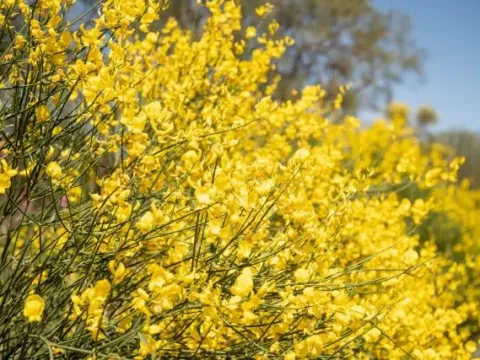
Hybrid broom
Cytisus hybrids
Hybrid broom (Cytisus hybrids) belongs to the Fabaceae family and is a popular group of ornamental shrubs. These hybrids are highly valued for their profuse, butterfly-shaped flowers that bloom in early summer, covering the branches almost entirely.
What the section contains
Hybrid broom
The plant thrives in full sun exposure. It is crucial to choose a location that provides at least 6-8 hours of direct sunlight per day to ensure dense flowering and to prevent the plant from becoming leggy and sparse.
Regarding soil requirements, hybrid broom needs well-drained, sandy, or slightly acidic soils. It is highly sensitive to waterlogged conditions, so heavy or clay-rich soils must be improved with drainage materials before planting.
The cultural practice involves minimal fertilization. As a member of the legume family, it can fix nitrogen in the soil, so excessive fertilizing is generally discouraged as it can lead to weaker growth and shorter lifespan.
Pruning is an essential maintenance task. It should be performed annually immediately after the flowering period to encourage new, vigorous growth and to maintain a compact, attractive shape of the shrub throughout the season.
The most common pests affecting hybrid broom include aphids and certain types of broom moths. Infestations can usually be managed with appropriate horticultural oils or systemic insecticides if detected early.
Fungal diseases like powdery mildew are common in humid and poorly ventilated conditions. Improving air circulation around the shrub and avoiding overhead watering are effective preventive measures.
Root rot is a critical threat caused by poor drainage. If the soil remains saturated for long periods, the roots may succumb to fungi, leading to the sudden wilting and death of the entire plant.
Leaf spot infections may occur during rainy springs. Using copper-based fungicides can help protect the foliage if the infection is identified during the initial stages of development.
Effective management includes regular inspection and maintaining plant hygiene by removing fallen leaves and dead twigs to prevent the overwintering of pathogens near the root zone.