
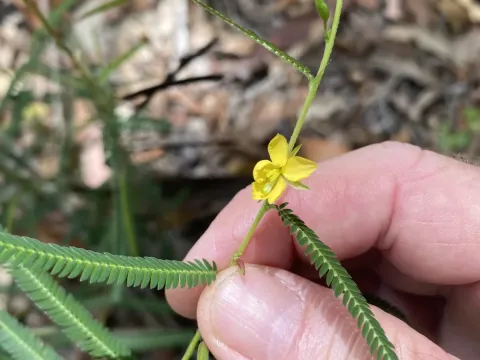
Cassia nomame
Cassia nomame
Cassia nomame is an annual herbaceous plant belonging to the Fabaceae family. It is native to the regions of Southeast Asia, where it thrives in warm and humid conditions typical of tropical environments.
What the section contains
Cassia nomame
The plant requires significant warmth to grow, with an optimal temperature range between 20°C and 30°C. It is highly sensitive to frost, making it suitable only for regions with long, frost-free growing seasons.
Regarding soil requirements, Cassia nomame prefers fertile, well-drained loamy soils. It does not tolerate waterlogging, which can cause root decay; therefore, field selection must ensure proper water runoff.
Botanically, it features pinnate leaves and distinctive yellow flowers, followed by the development of pods containing seeds. The plant's structure allows it to accumulate specific secondary metabolites useful in medicinal applications.
The primary economic value of Cassia nomame lies in its lipase-inhibiting properties. It is widely cultivated for the nutraceutical industry, where its extracts are used to assist in weight management and metabolic health.
Crop management for Cassia nomame involves mitigating common legume pests and diseases. Fungal infections, such as root rot and leaf spot, are prevalent in areas with high humidity and poor soil drainage.
Pests such as aphids and spider mites can infest the foliage, sucking nutrients from the plant and causing significant physiological stress. Early detection is crucial to prevent widespread damage.
Integrated Pest Management (IPM) is highly recommended. This includes crop rotation, maintaining proper spacing between plants, and utilizing biological control agents instead of heavy chemical applications.
Sanitation practices are essential, such as removing debris after harvest to reduce the inoculum load of soil-borne pathogens for the next growing season, ensuring long-term field productivity.
Maintaining balanced soil nutrition is equally vital; excessive nitrogen can lead to overly lush growth, which is more susceptible to insect colonization and fungal pathogen spread during humid weather.