
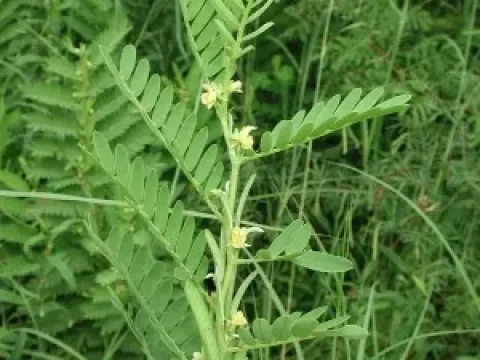
Cassia nigricans
Cassia nigricans
Cassia nigricans is an annual herbaceous plant belonging to the Fabaceae family. It is native to tropical Africa and has gained attention as a multipurpose crop in various tropical regions.
What the section contains
Cassia nigricans
The sowing season is determined by the onset of the rainy period. Proper soil preparation is essential, as the seeds require a consistent moisture environment for successful germination.
Seeds are typically drilled at a depth of 2 to 3 cm in rows. Proper spacing is crucial to prevent competition for light and nutrients among the emerging plants.
The plant exhibits a rapid growth rate once established, making it effective for soil cover and biomass production during the main growing season.
As a legume, Cassia nigricans plays a vital role in natural nitrogen fixation, which significantly benefits the subsequent crops in a rotation system.
This crop thrives in full sunlight and is highly sensitive to shading. It requires high solar radiation levels to maintain an optimal photosynthetic rate.
The ideal temperature for growth is between +25°C and +32°C. Cassia nigricans is well-adapted to warm tropical climates but is highly susceptible to frost.
Well-drained, sandy loam soils are preferred for this culture. It does not tolerate waterlogging, which often leads to root collar rot and physiological distress.
Water requirements include moderate rainfall during the vegetative phase. While the plant is somewhat drought-tolerant, supplemental irrigation is advised for maximum yield.
The soil should have a near-neutral pH level. If the soil is too acidic, liming may be necessary to improve the nutrient uptake of the legume roots.
The most common pests affecting Cassia nigricans include lepidopteran larvae and coleopteran beetles, which consume leaves and floral buds.
Fungal pathogens such as Fusarium species pose a significant threat, especially in humid conditions with poor drainage, leading to wilting of the crop.
Powdery mildew can occur during periods of high humidity and poor ventilation. Keeping the stand clear of weeds is essential for disease management.
Integrated Pest Management (IPM) strategies, including biological control agents, are recommended to maintain healthy yields without excessive chemicals.
Monitoring for signs of early chlorosis or insect damage is necessary to intervene before the infestation spreads throughout the field.