
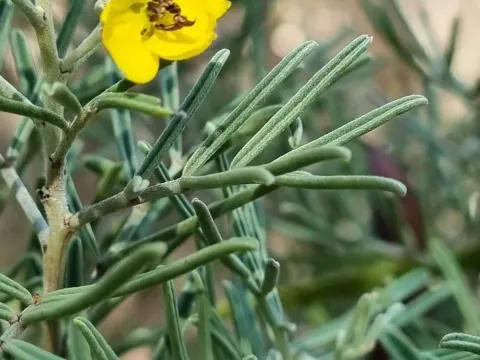
Cassia nemophila
Cassia nemophila
Cassia nemophila, commonly referred to as the desert cassia, is a perennial evergreen shrub belonging to the Fabaceae family. Native to the arid regions of Australia, it is highly regarded for its resilience in harsh, low-rainfall environments.
What the section contains
Cassia nemophila
This species is specifically adapted to survive in extreme heat and prolonged droughts. Its primary requirement for successful growth is full sun exposure, as the plant thrives in locations that receive intense light throughout the day.
Soil quality is secondary to drainage efficiency for this species. It prefers sandy, gravelly, or well-drained loamy soils. Heavy clays that retain water for long periods are generally unsuitable, as they can cause root decay.
The plant demonstrates a remarkable tolerance to alkaline and saline soils, making it a viable candidate for reclamation projects in difficult landscapes. Once established, it requires minimal irrigation, relying on its deep root system.
Botanically, it features unique needle-like foliage that reduces transpiration, acting as a natural survival mechanism against arid conditions. The vibrant yellow flowers appear in abundance, offering significant visual appeal for xeriscaping.
Cassia nemophila is notably robust and resistant to most common agricultural pests. Most health issues arise exclusively from environmental mismanagement, particularly concerning soil moisture levels and drainage systems.
Root rot is the most significant threat to the longevity of the plant. It is almost always a result of overwatering or planting in depressions where rainwater collects. Ensuring high-permeability soil is the primary preventative measure.
Pest issues are rare but can include occasional infestations of aphids on soft new growth during favorable climatic conditions. These are typically localized and rarely require widespread chemical control measures.
Air circulation is crucial for preventing fungal issues on the foliage. Densely planted groups should be thinned periodically to ensure that moisture does not remain on the leaves after rainfall or high humidity events.
Strategic monitoring of the plant’s vigor during the seedling stage is recommended. By keeping the site dry and well-aerated, growers can avoid almost all pathogen-related risks and ensure the plant reaches its full biological potential.