
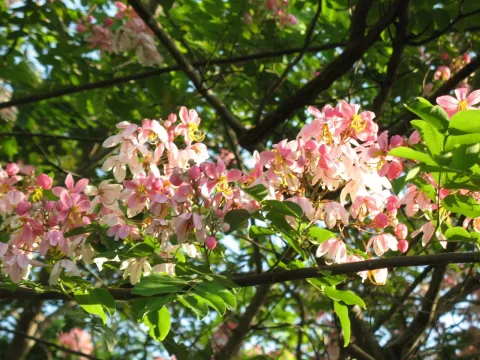
Cassia mannii
Cassia mannii
Cassia mannii is a notable tree species belonging to the legume family, Fabaceae. Originating from the tropical regions of Africa, this plant is well-adapted to warm, humid environments where it thrives in forest margins and open woodland areas.
What the section contains
Cassia mannii
The cultivation of this species requires a warm tropical climate without frost, as it is highly sensitive to cold temperatures. It demands a well-draining soil profile, preferably rich in organic matter, to ensure healthy root development and to prevent waterlogging during heavy rains.
As a light-loving plant, Cassia mannii performs best in full sun exposure. In landscape settings, it is essential to ensure that the site receives ample sunlight for most of the day, as this is a primary driver for its characteristic, vibrant yellow floral displays.
Agrotechnical maintenance includes regular monitoring of moisture levels, especially during the early stages of establishment. Once matured, the tree demonstrates moderate drought tolerance, though consistent soil moisture will result in more vigorous growth and denser canopy development.
In terms of хозяйственное (economic) utility, this species is primarily valued for its ornamental role in tropical urban and landscape development. Its unique structural form makes it an excellent choice for parkland aesthetics and biodiversity-focused gardening projects.
Common plant diseases affecting this species include leaf spot and various fungal infections, which are often exacerbated by poor air circulation and high humidity. Managing the density of the canopy through pruning is a key strategy for disease mitigation.
Pests such as aphids and scale insects are frequently observed, particularly on young, tender growth. These insects can cause significant leaf deformation if left untreated, necessitating regular inspections during the active growing season.
Soil-borne pathogens may compromise the root system if the planting site lacks proper drainage. To maintain plant health, it is recommended to apply organic mulch around the base, which helps regulate soil temperature and suppresses opportunistic pathogens.
Integrated pest management, including the use of horticultural oils or neem-based solutions, is highly effective for controlling common infestations while minimizing environmental impact. Regular sanitation practices, such as removing fallen leaves, help break the disease cycle.
Overall, long-term plant health for Cassia mannii is achieved through a combination of proper site selection, routine pruning, and balanced nutritional support. Consistent maintenance ensures that the tree remains a beautiful and functional component of any tropical landscape.