
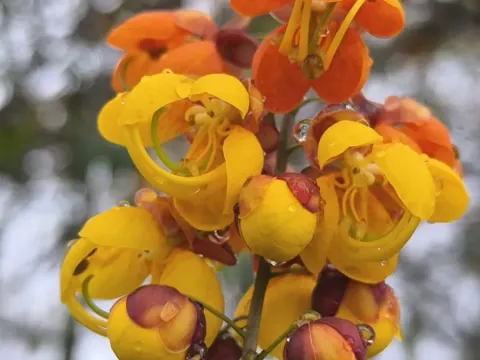
Cassia moschata
Cassia moschata
Cassia moschata is a distinguished member of the Fabaceae family, native to the tropical regions of Central and South America where it thrives in lush environments.
What the section contains
Cassia moschata
The plant demands high levels of solar exposure and prefers well-drained, nutrient-rich soils that support the development of a robust root system.
Temperature requirements are strictly tropical, necessitating stable warmth between 22°C and 30°C to avoid metabolic stress and ensure healthy vegetative growth.
Soil management should focus on preventing waterlogging, as the species is highly susceptible to root rot when subjected to prolonged saturation or anaerobic soil conditions.
Proper spacing is essential in plantation setups to allow adequate airflow and light penetration, which are vital for the development of mature, healthy canopy structures.
The economic value of Cassia moschata is primarily centered on its high-quality timber, which is utilized for construction, furniture making, and local artisanal crafts.
Its fruits, long and cylindrical pods, contain a distinct pulp that is harvested for traditional medicinal purposes and specific aromatic applications.
Yield sustainability is maintained through regular pruning and organic fertilization programs, which enhance the tree's vigor and its ability to produce consistent harvests.
Harvesting is typically done by hand once the pods reach physiological maturity, ensuring the integrity of the seeds and the chemical composition of the pulp.
Strategic planting, often integrated into agroforestry models, provides both ecological benefits and long-term economic returns through controlled harvesting cycles.
Fungal pathogens represent the most significant threat to Cassia moschata, particularly affecting the roots and vascular system when drainage is insufficient.
Insects and certain leaf-mining larvae can cause localized damage to the foliage, necessitating integrated pest management strategies to keep populations under control.
Maintaining sanitary conditions within the plantation, including the removal of dead or decaying wood, is critical to preventing the spread of diseases.
Environmental stress, such as unseasonable temperature drops or extreme drought, can weaken the trees and make them more susceptible to opportunistic secondary infections.
Early diagnosis of pest infestations is key to protecting the tree's development and ensuring high-quality output for commercial and medicinal applications.