
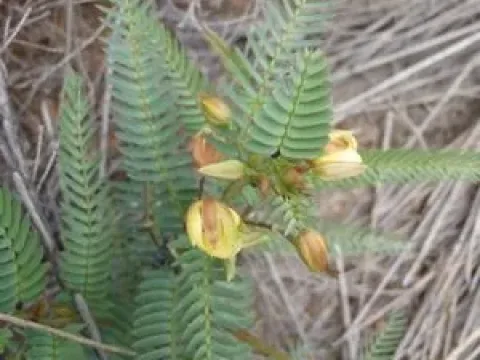
Cassia mimosoides
Cassia mimosoides
Cassia mimosoides is a versatile leguminous annual widely cultivated for its soil-improving qualities and forage potential. In tropical zones, planting is typically initiated with the onset of the rainy season to capitalize on moisture for optimal germination.
What the section contains
Cassia mimosoides
In temperate climates, the planting window starts once soil temperatures consistently reach 15–18 degrees Celsius. Because this species is highly sensitive to frost, producers must ensure the risk of spring temperature drops has completely passed.
Seeding is performed in rows with a spacing of 30–45 centimeters to ensure balanced development and air circulation. A shallow planting depth of 1–2 centimeters is critical, as small seeds rely on consistent soil contact for immediate root initiation.
Seeding density varies depending on the intended application, with higher rates used for green manure and lower rates for seed production. Its rapid growth habit allows the canopy to close quickly, effectively shading out competitive weed species.
Intercropping with other legumes or grasses is a common practice to enhance field resilience. This multi-layer vegetation approach is especially beneficial for soil stabilization and moisture retention in varying agricultural landscapes.
This crop is strictly photophilous, requiring full sun exposure throughout the day to achieve maximum vegetative output. Any degree of shading will negatively impact photosynthesis and result in elongated, weak stems.
The plant performs best in well-drained sandy or sandy-loam soils with efficient aeration. Poor drainage or waterlogged conditions must be strictly avoided, as the root system is highly susceptible to decay in stagnant water environments.
Soil pH preference ranges from neutral to slightly acidic. Agronomists recommend conducting a soil analysis prior to planting to adjust acidity levels, ensuring the optimal chemical environment for nitrogen-fixing nodule formation.
The temperature optimum for growth is between 22 and 30 degrees Celsius. While it can withstand periods of drought, growth significantly slows down once temperatures fall below the threshold of 10 degrees, leading to eventual plant mortality in cold conditions.
Establishing the crop requires consistent moisture during the first few weeks after emergence. Once the taproot has fully developed, the plant exhibits notable drought tolerance, allowing it to survive dry intervals that would stunt other vegetation.
The biomass yield of Cassia mimosoides can reach 15–20 tons per hectare under optimal conditions. Yield is directly influenced by soil fertility, irrigation timing, and the maintenance of a weed-free field during the early growth stages.
For green manure applications, biomass should be harvested during the early flowering phase. This is the stage when nutrient concentration, particularly nitrogen, is highest within the vegetative tissues, providing maximum benefit to the soil.
Seed yield typically ranges from 0.5 to 0.8 tons per hectare, depending on pollination rates. Strategic placement of hives near fields can significantly boost seed output due to increased bee activity and effective pollination.
Applying organic matter, such as compost or well-rotted manure, can increase biomass output by 20–25 percent. Rotational planning is also essential, with cereal grains often serving as the best preceding crops for this legume.
As a forage source, the crop is valued for its protein content. While not typically used as a primary feed, it serves as an excellent high-protein supplement when incorporated into mixed hay or silage rations for ruminants.
Root rot is the most prevalent pathological threat, particularly in poorly drained soils or heavy clay substrates. Symptoms include premature wilting and a lack of vigor, which can quickly lead to localized crop failure if not addressed.
Leaf-eating pests, such as lepidopteran larvae, can cause significant damage to the canopy if left uncontrolled. Integrated pest management, focusing on biological insecticides, is highly recommended to protect the integrity of the harvest.
Foliar diseases, such as leaf spots, are more likely to appear during extended periods of high humidity and poor ventilation. Keeping row spacing consistent is a vital cultural practice to mitigate these risks and maintain plant health.
Root-knot nematodes represent a hidden threat in sandy soils, hindering nutrient uptake and reducing plant size. Crop rotation with non-host species is the most reliable strategy to minimize nematode population densities in the field.
Regular field scouting is essential to identify early warning signs of pests or disease. By employing a combination of cultural practices, such as proper fertilization and irrigation, growers can ensure a robust and productive crop cycle.
Harvesting for green manure is done at the onset of flowering. Mowers are used to cut and shred the biomass, which is then incorporated into the top 10–12 centimeters of soil to facilitate efficient decomposition and nutrient release.
Seed harvesting should occur as soon as pods turn brown but before they become brittle. Timing is critical, as pods can shatter easily, leading to significant seed loss if harvest is delayed by even a few days.
After collection, seeds must be dried in shaded, well-ventilated areas to reduce moisture content for storage. Avoiding direct exposure to intense solar radiation is necessary to preserve seed viability and high germination energy.
Storage should take place in dry, pest-proof containers to maintain quality. Frequent moisture monitoring is recommended throughout the storage duration to ensure the seeds remain free from fungal or insect contamination until the next planting cycle.
Seed cleaning processes, including mechanical sorting and air-blowing, are required to remove chaff and pod debris. High-quality cleaned seed is essential for maintaining uniformity and yield potential in subsequent crop plantings.