
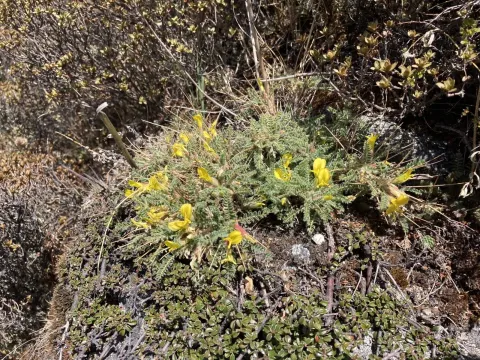
Astragalus rhizanthus
Astragalus rhizanthus
Astragalus rhizanthus is a perennial herbaceous plant belonging to the Fabaceae family. Seeds should be sown in early spring or late autumn, as the seeds have a hard coat and require scarification to improve germination rates.
What the section contains
Astragalus rhizanthus
The planting depth should be 2–3 cm in light soils and no more than 1.5–2 cm in heavier ones. The crop grows slowly during the first year, making it essential to keep the fields free of weeds to ensure successful establishment.
The seeding rate typically ranges from 8–10 kg per hectare in row planting. An optimal row spacing of 30–45 cm is recommended to form a dense and healthy canopy.
The plant has a high regenerative capacity after cutting, allowing for multiple harvests within a single season, provided there is adequate soil moisture during the growing period.
After seedling emergence, inter-row cultivation should be performed to improve soil aeration, which promotes the development of the taproot system and enhances the overall strength of the plant.
Astragalus rhizanthus is a drought-tolerant and winter-hardy plant well-adapted to mountainous and foothill regions. It thrives in well-lit areas with moderate rainfall.
The crop is not overly demanding regarding soil type; however, it achieves the best productivity in loose, well-drained soils, including rocky and sandy loam substrates.
The plant does not tolerate waterlogging, as excessive soil moisture can lead to root rot. The optimal soil pH range is neutral, between 6.5 and 7.5.
In its natural habitat, the plant is found in alpine and subalpine zones, which contributes to its high resilience against temperature fluctuations during the spring.
As a legume, it forms a symbiosis with nitrogen-fixing bacteria, generally eliminating the need for high levels of nitrogen fertilizer application.
The yield of Astragalus rhizanthus varies depending on the region and management practices. With intensive care, green mass yields can reach 15–20 tons per hectare.
Seed production is a critical economic indicator; under favorable weather conditions during flowering, farmers can expect yields of 300–500 kg of seeds per hectare.
Biomass accumulation continues throughout the growing season, but the peak nutrient concentration occurs during the budding and early flowering stages, which is ideal for fodder harvesting.
Perennial plantations remain productive for 5–7 years with proper maintenance, weed control, and occasional mineral fertilization.
To improve yields over time, producers should practice plantation rejuvenation through overseeding or light mechanical cultivation to encourage plant tillering.
The main threats to the crop include fungal diseases such as Fusarium wilt and powdery mildew, which often develop under conditions of high humidity or poor soil drainage.
Insect pests like weevils can cause significant damage by feeding on both vegetative tissues and reproductive organs, specifically buds and developing seed pods.
Aphids are another potential risk, as they sap nutrients from young shoots, weakening the plant's immunity and reducing its ability to survive winter dormancy.
Preventive measures include strict crop rotation, seed treatment before planting, and selecting varieties or populations naturally resistant to local pathogens.
Controlling weeds is a critical aspect of crop protection, as many weed species serve as reservoirs for viruses and pests that can attack the Astragalus field.
Harvesting for green fodder should take place during the mass flowering period, when the plant contains the highest levels of protein and digestible nutrients.
Seed harvesting must be carried out as soon as the pods reach maturity to prevent cracking and seed loss, which requires diligent monitoring of the field conditions.
The harvested material should be dried rapidly to produce high-quality hay or processed into meal to preserve its vitamin profile and nutritive value.
Cutting height should remain at least 5–7 cm above the ground to avoid damaging the root crown, which is essential for healthy regrowth in subsequent cuts.
After the final harvest of the season, a light harrowing of the plantation is recommended to remove plant debris that could harbor disease or pests.