
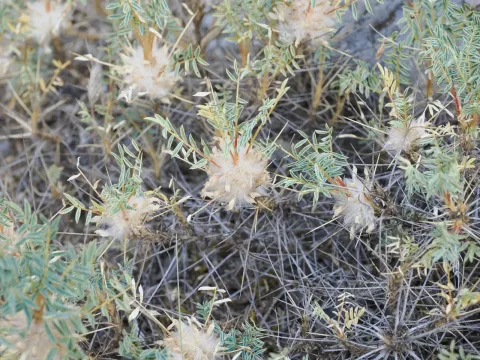
Astragalus parnassi
Astragalus parnassi
Astragalus parnassi is a member of the Fabaceae (legume) family. This perennial herb is native to mountainous regions, where it has adapted to harsh environmental conditions, rocky substrates, and areas characterized by excellent natural drainage.
What the section contains
Astragalus parnassi
The plant is highly valued for its exceptional drought tolerance and its ability to thrive in nutrient-poor soils. It prefers open, sun-exposed locations with a neutral to slightly alkaline soil pH, as it is sensitive to acidic or waterlogged environments.
In agricultural practice, soil aeration is the most critical requirement for the successful cultivation of Astragalus parnassi. Compacted or heavy clay soils inhibit root development and hinder the nitrogen-fixing processes associated with the root nodules.
The species exhibits remarkable cold resistance, surviving significant temperature fluctuations common in high-altitude or continental climates. This resilience makes it a hardy candidate for ecological restoration and forage programs in challenging regions.
A key biological feature of this crop is its symbiosis with specific soil bacteria. By fixing atmospheric nitrogen, the plant enriches the soil, offering significant advantages for sustainable crop rotation and reducing the need for synthetic fertilizers.
Sowing should ideally occur in early spring when soil temperatures stabilize between 10 and 12 degrees Celsius. Because of the hard seed coat, scarification is highly recommended to improve germination rates and uniformity across the field.
Seeds should be sown at a shallow depth of 1 to 2 centimeters. Proper soil contact is ensured through light rolling after sowing, which helps maintain moisture levels necessary for the embryos to break dormancy and emerge successfully.
Row planting is the preferred method for commercial cultivation, with row spacings typically set between 30 and 45 centimeters. This arrangement provides sufficient space for root development while allowing for efficient mechanical weed control during the early stages.
During the first growing season, the plant allocates energy primarily to root system development. Consequently, above-ground growth is limited, and keeping the field clear of invasive weeds is essential for plant survival during this establishment phase.
Once established, Astragalus parnassi develops a robust foliage system by the second year. Strategic planting density is crucial to balance individual plant vigor with the overall biomass production, ensuring sustainable yields for future harvests.