
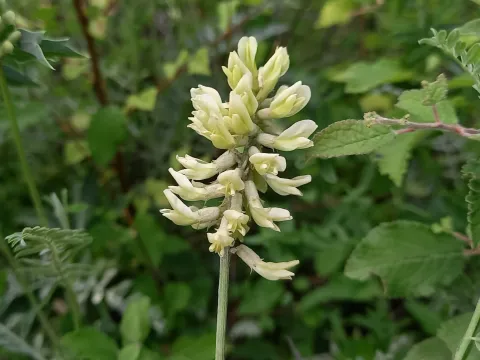
Astragalus odoratus
Astragalus odoratus
Sowing of Astragalus odoratus is best performed in early spring, once soil temperatures consistently reach 5–8 degrees Celsius. This timing allows the seeds to utilize spring soil moisture, facilitating uniform germination across the field.
What the section contains
Astragalus odoratus
Seed scarification is an essential pre-sowing practice for this species. Given the hard seed coat characteristic of many Astragalus varieties, mechanical or chemical scarification is necessary to achieve high field germination rates.
Seeds should be sown at a shallow depth, ideally between 2 and 3 centimeters. Placing seeds too deep may result in weak seedlings that fail to emerge, ultimately reducing the final stand density of the crop.
The recommended seeding rate varies, generally falling within the range of 10 to 12 kilograms per hectare. Precise calibration of seed drills is required to ensure even distribution and avoid overcrowding in specific rows.
Post-seeding soil compaction is highly recommended to bridge the gap between seeds and soil particles. This practice improves capillary moisture uptake, significantly increasing the probability of successful crop establishment.
Astragalus odoratus is a member of the Fabaceae family, adapted to diverse climatic conditions. It thrives in temperate environments and is particularly valued for its resilience in semi-arid and steppe regions.
The plant prefers well-drained soils and is sensitive to waterlogging. It performs exceptionally well on calcium-rich substrates, such as chernozems or chestnut soils, provided that the water table is not excessively high.
A notable feature of this species is its profound drought tolerance, attributed to an extensive taproot system. This trait allows the crop to remain productive even during periods of significant moisture deficit.
Sunlight requirements for the fragrant milkvetch are high, as the plant is heliophilic. Optimal biomass accumulation and flowering depend on full sun exposure, making open agricultural plots ideal for its cultivation.
As a legume, Astragalus odoratus maintains a symbiotic relationship with nitrogen-fixing bacteria. Consequently, it requires minimal nitrogen fertilization, as it can satisfy a significant portion of its nitrogen needs from the air.
The biomass yield of Astragalus odoratus typically ranges from 15 to 20 metric tons per hectare, depending on soil fertility and irrigation. Productivity generally peaks during the second and third years of establishment.
For high-quality forage, harvesting should occur during the budding phase. This is when the concentration of crude protein and essential nutrients is at its highest, providing excellent feed value for livestock.
Seed production requires careful timing, as the maturation process can be non-uniform. Harvesting should be initiated when a significant portion of the pods turns brown, preventing excessive shattering of the seeds.
The crop demonstrates strong regrowth potential following cutting, allowing for two harvests per season under favorable moisture conditions. Its palatability and nutritional content make it a preferred choice for mixed fodder.
Beyond animal feed, the crop serves as a soil improver. The nitrogen-fixing capabilities and the substantial root mass contribute to improved soil structure and long-term fertility in the agricultural rotation.
Weevils represent one of the primary pests for Astragalus crops, specifically targeting developing flower buds and seeds. Integrated pest management strategies, including crop rotation, are essential for mitigation.
Fungal diseases like powdery mildew may arise under conditions of high humidity and poor air circulation. Maintaining appropriate plant spacing and avoiding excessive moisture in the canopy are effective cultural control methods.
Root rot is a major threat in fields with inadequate drainage. Proper site selection and land preparation to avoid stagnant water are the most reliable ways to protect the plant’s root system from decay.
Weed management is critical during the seedling stage, as the crop grows slowly initially and can be easily outcompeted. Mechanical weeding or the use of pre-emergent cultivation techniques can ensure successful establishment.
Seed-feeding insects can cause significant losses in stored seed lots. Proper cleaning of seeds post-harvest and storage in cool, dry conditions with regular inspections are necessary to maintain seed viability for future use.
Harvesting for hay involves standard mower-conditioner machinery to cut the crop at the onset of flowering. The biomass is then allowed to wilt in the field, ensuring the moisture content drops to safe levels for storage.
For seed harvesting, a combine harvester is used, but it must be calibrated with lower drum speeds to prevent seed cracking. Careful adjustment of wind and sieve settings is required to separate seeds effectively.
Chemical desiccation is sometimes employed to synchronize the maturation of the crop. This facilitates a cleaner, more efficient harvest process, particularly in years with irregular flowering and pod development.
After the harvest, seeds must be thoroughly cleaned using air-screen cleaners to remove chaff and impurities. Proper moisture management—keeping the seed moisture below 14%—is essential for safe long-term storage.
Crop residue management is the final step, involving the incorporation of biomass into the soil. This replenishes organic matter and nitrogen, providing a beneficial legacy for the succeeding crops in the rotation cycle.