
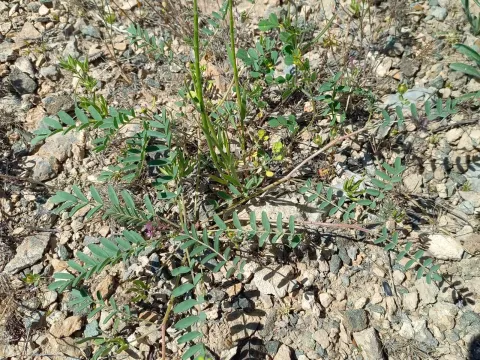
Astragalus oxyglottis
Astragalus oxyglottis
Astragalus oxyglottis is an annual herbaceous plant belonging to the Fabaceae family, commonly found in steppe and semi-desert regions of Eurasia.
What the section contains
Astragalus oxyglottis
The plant is characterized by a deep taproot system, which allows it to thrive in arid environments by accessing moisture from deeper soil layers.
As a legume, it has the ability to form symbiotic relationships with nitrogen-fixing bacteria, which enriches the soil and supports the plant's growth.
Due to the hard seed coat, scarification is recommended before sowing to improve germination rates and ensure uniform crop establishment.
The optimal sowing period is early spring, which takes advantage of residual soil moisture and promotes vigorous early vegetative development.
Astragalus oxyglottis is a xerophytic plant that is highly adapted to regions with low annual rainfall and high daytime temperatures.
It performs best on light, sandy or loamy soils that provide excellent drainage, as the species is sensitive to waterlogging and root rot.
Abundant light is essential for its development, so the plant should be grown in open areas without competition from taller vegetation.
While it is tolerant of poor soil conditions, adequate nutrient levels help maximize biomass production during the growing season.
Its ability to withstand mild soil salinity makes it an ideal candidate for revegetation projects in degraded or salt-affected semi-arid landscapes.
The primary agricultural use of Astragalus oxyglottis is as a forage crop, providing nutritious feed for livestock in dry pastoral areas.
Biomass yield is highly dependent on precipitation patterns, though the plant remains productive even when other species suffer from drought.
It adds significant value to hay mixes, providing high protein content and improving the overall nutritional profile of the harvested fodder.
Seed production can be variable and requires careful management to prevent pod shattering and minimize losses during the harvesting process.
By integrating this crop into low-input farming systems, producers can maintain pasture productivity with minimal irrigation requirements.
Fungal infections, such as rusts, can impact the health of the foliage, especially during periods of uncharacteristic humidity or poor air circulation.
Insects like nodule weevils often target young seedlings, causing damage to leaf tissues and potentially reducing overall plant density.
Phytophagous insects can infest the pods during seed development, which significantly decreases the final seed yield and grain quality.
Root pathogens can become a problem if the plant is grown in heavy, poorly drained soils where conditions favor the proliferation of rot-inducing fungi.
Integrated pest management, including crop rotation and the use of resistant seed varieties, is recommended to mitigate these biotic threats.
Harvesting for forage should be timed to the peak flowering stage to ensure the highest quality biomass with maximum protein content.
Cutting during the early morning hours helps preserve moisture and minimizes leaf shatter, resulting in higher-quality hay production.
When harvesting for seeds, it is crucial to wait until the pods have turned color and begun to dry, but before they start to shatter.
Post-harvest handling involves drying the seeds thoroughly to prevent mold growth and maintain viability for future planting seasons.
Modern harvesting machinery should be calibrated to handle small legumes gently to ensure high recovery rates of the valuable seed crop.