
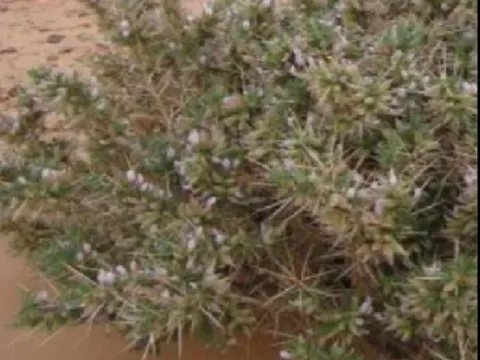
Astragalus gyzensis
Astragalus gyzensis
Astragalus gyzensis is a perennial herbaceous plant belonging to the Fabaceae family. It is known for its remarkable adaptation to arid and semi-arid environments, demonstrating high resilience to drought and nutrient-poor, saline soils.
What the section contains
Astragalus gyzensis
The plant originates from desert and semi-desert regions, where it has evolved distinct morphological traits to survive in harsh conditions. These include a deeply penetrating taproot system and reduced leaf surface areas to minimize water loss through transpiration.
Regarding soil requirements, this species thrives in well-drained sandy or loamy-sand soils. It is particularly valued for its tolerance to calcareous substrates, which makes it an excellent candidate for the reclamation of degraded lands in arid zones.
Climate adaptation is a key feature of Astragalus gyzensis. It requires high solar radiation and thrives in temperatures ranging between 20 to 30 degrees Celsius, making it perfectly suited for cultivation in regions with long, hot summers and minimal rainfall.
Optimal agrotechnology includes ensuring sufficient space between plants to prevent competition for limited soil moisture. The crop does not tolerate overcrowding, as adequate sunlight is vital for maintaining high photosynthetic efficiency during the peak growth season.
The primary agricultural use of Astragalus gyzensis is as a forage crop. Its biomass provides a critical source of protein for livestock in regions where traditional grasses struggle to grow due to the lack of irrigation and extreme heat.
The plant shows excellent regeneration potential after grazing or mechanical mowing. This ability to recover quickly makes it a sustainable choice for managed pasture systems, allowing for multiple harvests per year under favorable soil moisture conditions.
Seed production is consistent, provided the plants receive enough energy during the flowering period. The seeds are resilient, ensuring high germination rates when conditions improve, which is essential for natural range reseeding programs.
Beyond its forage value, this species acts as an effective soil stabilizer. Its extensive root system prevents wind and water erosion on loose, sandy soils, while its nitrogen-fixing capabilities improve overall soil fertility for subsequent crops.
By integrating Astragalus gyzensis into local agricultural practices, farmers can improve the stability of their food supply in arid regions. Its ability to provide consistent biomass makes it a cornerstone of sustainable land management in challenging climates.