
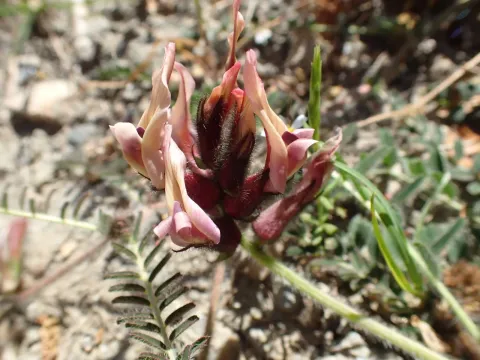
Astragalus haarbachii
Astragalus haarbachii
Astragalus haarbachii is a perennial herbaceous plant belonging to the Fabaceae (legume) family. It is primarily known for its evolutionary adaptation to arid and semi-arid environments, making it a robust candidate for cultivation in regions with limited precipitation.
What the section contains
Astragalus haarbachii
The plant features a deep, well-developed taproot system that facilitates efficient water uptake from subsoil layers. Its morphology includes erect, branching stems covered in compound, odd-pinnate leaves, which contribute to a significant biomass yield suitable for agricultural purposes.
Regarding soil requirements, Astragalus haarbachii thrives in light-textured soils, including sandy loams and well-drained calcareous soils. It is particularly noted for its tolerance to saline soil conditions, which often restricts the growth of more sensitive forage species.
Climate preferences for this species emphasize high light intensity and moderate temperature regimes. It is highly resistant to winter cold, showing excellent survival rates in continental climates, provided the soil is not prone to prolonged saturation or flooding.
Its primary agricultural application is as a high-protein forage crop. Due to its nitrogen-fixing capabilities, the plant also serves an ecological role in improving soil health, making it an excellent choice for sustainable pasture management and soil restoration efforts.
The primary fungal threats to Astragalus haarbachii include leaf spot diseases and rusts. These are most prevalent in seasons with high humidity or poor air circulation, which can lead to significant foliage damage if left unchecked.
Root rot pathogens pose a constant challenge, particularly in poorly drained soils. Excess moisture limits oxygen supply to the roots, creating favorable conditions for fungal growth and weakening the plant's structural integrity.
Insect pests, such as nodule weevils, represent a significant threat to young stands. These pests feed on roots and root nodules, potentially impairing the plant's nitrogen-fixing function and stunting overall growth rates.
Aphid populations can occasionally reach threshold levels during the summer months. By feeding on succulent stems and leaves, they reduce the quality of the green forage and can transmit various viral diseases that further stress the crop.
Effective management against these threats relies on integrated pest management (IPM) strategies. Regular crop scouting, maintaining optimal plant density to ensure airflow, and timely application of targeted biological control agents are essential for high yields.