
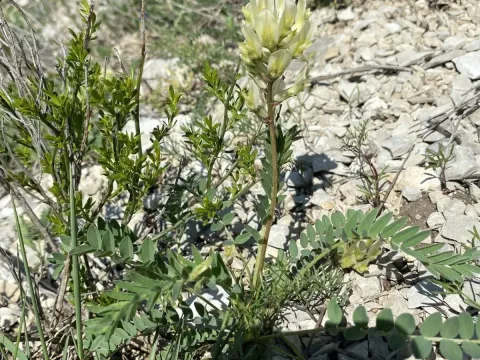
Astragalus fragrans
Astragalus fragrans
Astragalus fragrans is a perennial legume species recognized for its resilience and ability to thrive in diverse steppe and semi-arid environments. It is increasingly valued in agricultural systems for its dual role as a forage crop and a soil-improving plant.
What the section contains
Astragalus fragrans
Sowing should take place in early spring as soon as the soil reaches a temperature of 5 to 8 degrees Celsius. This timing allows the plant to take full advantage of lingering soil moisture from winter precipitation for early establishment.
Given the hard coat of the seeds, scarification is a mandatory pre-sowing treatment to ensure high germination rates. Sowing can be performed using standard drills, typically at a depth of 2 to 4 centimeters depending on soil texture.
Field compaction after sowing is recommended to ensure optimal seed-to-soil contact. This practice promotes uniform emergence and helps prevent desiccation of the germinating seeds in the topsoil layer.
During the first year of growth, the plants develop slowly while focusing on establishing a deep, robust taproot. Weed control during this stage is essential to prevent competitive species from overwhelming the young astragalus plants.
The plant is highly heliophilic, preferring full sunlight and well-ventilated fields. It is remarkably tolerant of heat and dry conditions, making it an excellent candidate for regions where water resources may be limited during summer.
Soil requirements include well-drained, fertile soils with a pH ranging from neutral to slightly alkaline. It performs exceptionally well in black earth (chernozem) and chestnut soil types found in the Eurasian steppe zones.
Waterlogging is detrimental to the plant, as it increases the risk of root pathogens and reduces yields. Therefore, selecting high-lying fields with natural drainage is a key management priority for long-term productivity.
As a legume, it naturally forms a symbiotic relationship with nitrogen-fixing bacteria. This feature reduces the reliance on external nitrogen fertilizers, though phosphorus and potassium supplements are recommended to support vigorous growth.
Astragalus fragrans exhibits high cold tolerance, surviving harsh winter temperatures under typical snow cover. Spring regrowth begins early in the season, providing a valuable source of early forage for livestock.
The agricultural primary use of this crop is for high-quality hay production and as a grazing forage. It provides a dense nutrient profile that is readily palatable to livestock, making it a reliable feed source.
Yield potential is dependent on the management practices and seasonal climatic factors. With proper care, multiple cuts can be harvested within a single season, significantly boosting the total biomass production.
As a green manure or cover crop, Astragalus fragrans improves soil structure and fertility. Its extensive root system breaks through soil compaction and increases aeration, providing lasting benefits to subsequent crops in a rotation.
The plant is known for its longevity, remaining productive for five to eight years in a single field. This long lifespan reduces the labor and input costs associated with frequent tillage and reseeding activities.
Seed production is an important aspect for farmers looking to expand their stands. Harvesting should be carefully timed when the pods reach full maturity and turn brown to maximize seed collection.
Common fungal diseases such as powdery mildew can occasionally affect foliage during periods of high humidity. Proactive measures, such as maintaining appropriate plant spacing and field ventilation, can mitigate these risks.
Root rots are potential threats, particularly if the field experiences excessive moisture or poor drainage. Proper site selection and careful irrigation management are critical to preventing these soil-borne diseases.
Insects like weevils can damage young growth and reproductive organs, especially during the flowering stage. Monitoring programs are essential to determine if intervention with authorized pest management products is necessary.
Aphids can also congregate on the plants, potentially impacting vigor if infestations are severe. Early detection allows for more effective biological or chemical control strategies to be employed.
Good phytosanitary practices, including the regular removal of crop residues and adherence to sound crop rotation, are the most effective defenses against the accumulation of pathogens and insect populations.
Harvesting for hay should be timed during the early flowering phase to maximize the nutritional content of the forage. Harvesting at this stage ensures the best balance between biomass quantity and protein content.
The cutting height should be adjusted to 7–10 centimeters from the ground to encourage rapid regrowth of the plant. Using modern hay conditioners can decrease drying time and minimize nutrient loss from prolonged field exposure.
Seed harvesting requires precision, as the pods are prone to shattering when fully dry. Harvesting during early morning hours can help reduce seed loss due to pods splitting before the machinery reaches them.
After harvesting, seeds must be cleaned to remove debris and dried to a moisture content of 12–14% to prevent molding during storage. Cool, dry, and ventilated storage conditions are ideal for preserving germination viability.
Effective hay management, including baling and proper shed storage, prevents secondary fermentation or spoilage. This ensures the nutritional quality of the forage is preserved throughout the winter feeding period.