
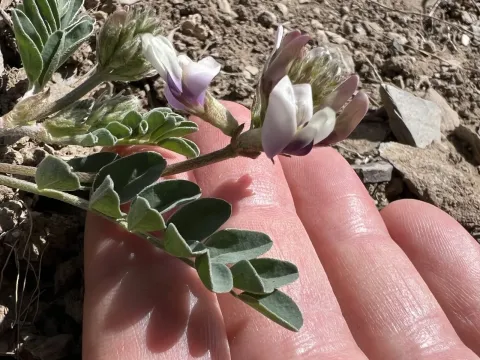
Cumin sage
Astragalus cibarius
Cumin sage (Astragalus cibarius) is a perennial herbaceous plant belonging to the legume family (Fabaceae), native to arid regions. Sowing should ideally take place in early spring when the soil temperature consistently reaches 8–10 degrees Celsius.
What the section contains
Cumin sage
The seeds of this species possess a hard seed coat, which necessitates scarification prior to planting to ensure uniform germination. It is recommended to sow the seeds in rows with spacing between 45 and 60 centimeters to facilitate healthy root system development.
The optimal planting depth is approximately 2 to 3 centimeters, ensuring the seeds are sufficiently covered yet able to emerge easily. Lightly compacting the soil after sowing helps maintain moisture contact around the seeds, which is vital for success.
During the first year of growth, the plant focuses its energy on developing its root system and establishes itself slowly. Therefore, keeping the plot clear of competitive weeds during the early developmental stages is essential for the crop's long-term success.
Full establishment of the stand occurs by the second year after overwintering. Using high-quality, pre-treated seeds is the best practice for ensuring a dense and productive field of Cumin sage.
This crop thrives in sunny, well-lit locations and performs poorly in shaded environments. Adequate solar radiation is critical for the plant to store energy and produce a high-quality biomass suitable for animal fodder.
Cumin sage prefers well-draining soil types, such as sandy loams or light loamy soils. Good aeration is vital for the survival of the roots, as the plant is highly sensitive to waterlogging and poor drainage conditions.
One of the key traits of this plant is its remarkable drought tolerance, which is a result of its adaptation to arid and semi-arid environments. Excessive moisture, particularly during the dormant season, can lead to root rot and loss of stand.
The ideal soil pH for this culture ranges from 6.5 to 7.5. It does not perform well in highly saline or acidic soils, so testing the soil and performing necessary adjustments before sowing is highly recommended for optimal yields.
As a plant adapted to extreme climate fluctuations, it is highly winter-hardy. The root system remains safe through cold winters, allowing for rapid regrowth once the temperatures rise in the spring season.
The main agricultural value of Cumin sage lies in its ability to produce substantial green mass. This biomass is a reliable source of protein and nutrients for livestock, especially in environments where other crops might fail.
Depending on local rainfall and management practices, the yield can range from 8 to 15 tons of green mass per hectare. In regions with supplemental irrigation, these yields can be significantly improved during dry years.
Nutritional quality remains stable even during the pod-ripening phase, making it a flexible crop for harvesting. Its high vitamin content makes it a superior choice for animal diets compared to lower-quality grasses.
Beyond its feed potential, the crop contributes to soil health through symbiotic nitrogen fixation. The presence of rhizobia on its roots improves the overall nitrogen content of the soil, benefiting the entire crop rotation cycle.
Seed harvesting should be performed carefully once the pods begin to dry and change color. Proper timing prevents the pods from shattering and ensures the highest possible seed yield per hectare.
Cumin sage generally exhibits high resistance to many common diseases that plague other leguminous crops. However, the most significant threat remains root rot, which typically occurs due to poor drainage and soil waterlogging.
Pests such as pea leaf weevils can cause damage to the foliage and roots, especially in young plants. Integrated pest management, focusing on early detection and biological control, is the preferred approach for this crop.
Powdery mildew is occasionally observed, particularly in conditions of high humidity combined with poor airflow. Maintaining proper plant density helps manage the microclimate and significantly reduces the risk of this fungal pathogen.
Maintaining proper distance from other related legumes helps minimize the transmission of crop-specific pests. Weekly monitoring of the field ensures that any localized issues can be addressed before they become widespread.
Chemical intervention should be used only as a last resort to preserve the beneficial soil microorganisms that the plant relies on. Prioritizing biological and cultural control methods ensures the sustainability of the cultivation plot.
Harvesting for green fodder is most effective during the budding stage, when the nutrient profile is at its peak. The dried hay retains excellent palatability and can be stored for long periods without losing its quality.
Mechanical harvesting of seeds requires calibrated combine settings to prevent crushing the pods. Once harvested, the seeds must be thoroughly cleaned and dried in a ventilated area to ensure they reach appropriate storage humidity.
After the harvest, clearing the field of crop residues is recommended to prevent the buildup of pathogens. Leaving the roots in the soil allows for the organic matter and fixed nitrogen to be recycled naturally into the earth.
As a multi-cut system, the crop can be harvested several times during a single growing season if moisture conditions allow. This versatility provides excellent economic returns for farm operations focused on fodder production.
Properly stored seeds can maintain their high germination rate for several years. Keeping them in cool, dry, and dark conditions is essential for maintaining the seed bank for future agricultural cycles.