
Cup clover
Trifolium cyathiferum
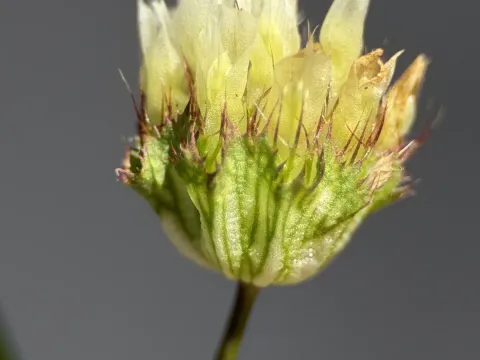
Cup clover (Trifolium cyathiferum) is an annual herbaceous legume species native to the western regions of North America. It is distinguished by its unique cup-like bracts that hold the flower heads, providing it with a distinct appearance compared to other clovers.
What the section contains
Cup clover
The sowing process begins in early spring when soil temperatures reach stable levels sufficient for germination. Due to the small size of the seeds, precise shallow drilling is required to ensure that they are not buried too deeply to emerge effectively.
Seedbed preparation must be thorough, aiming for a fine tilth that ensures excellent seed-to-soil contact. This contact is vital for the uptake of soil moisture, which is the primary driver of germination success in small-seeded legumes like cup clover.
Row spacing should be managed to optimize plant competition with weeds while maximizing space for light interception. Narrow rows are generally preferred to create a quick canopy closure, which naturally suppresses weed growth during the early vegetative stages.
Seeding rates are adjusted based on the purity and germination potential of the batch. Careful calibration of agricultural machinery is essential to prevent overcrowding, which could otherwise lead to increased competition for nutrients and water among the young plants.
This species thrives in cool, moist environmental conditions. It is best suited to fertile, well-drained loam soils that maintain moisture without becoming waterlogged, as poor drainage can rapidly lead to root decay and overall plant stress.
Soil pH levels should ideally be maintained in the range of 6.0 to 7.0. Soils that are overly acidic may require liming to facilitate the effective function of symbiotic nitrogen-fixing bacteria, which are essential for the plant's health and development.
Cup clover is sensitive to extreme heat and prolonged dry spells. In warmer climates, the plant may accelerate its lifecycle, moving rapidly from vegetative growth to flowering, which reduces the total biomass yield and limits its effectiveness as a forage crop.
Adequate phosphorus and potassium levels in the soil are critical for supporting root health and plant vigor. While legumes fix atmospheric nitrogen, providing a base level of these macro-nutrients ensures that the plants reach their full yield potential.
Exposure to direct sunlight is preferred, though the plant shows some tolerance to partial shade. Balanced light conditions are necessary to maintain vigorous photosynthesis, especially during the peak of the growing season when water demand is high.
Powdery mildew and various rust diseases represent the primary pathological risks for this crop. These fungal infections are particularly prevalent during periods of high humidity and poor airflow, necessitating careful management of stand density to mitigate spread.
Pests such as the clover root curculio can cause significant damage to young seedlings. These insects feed on the root nodules and foliage, weakening the plant's ability to fix nitrogen and potentially leading to significant stand thinning if left unchecked.
Integrated Pest Management (IPM) strategies, including crop rotation, are essential for controlling disease outbreaks. By rotating away from legume species for several years, producers can effectively break the life cycles of soil-borne pathogens and pests.
When chemical intervention is required, selective insecticides should be prioritized to preserve the populations of beneficial insects, such as bees, which are essential for cross-pollination and subsequent seed development in clover crops.
- Maintaining good field drainage to reduce fungal pressure.
- Regular field monitoring for signs of localized infestation.
- Selection of appropriate site-specific cultivars for regional adaptation.