
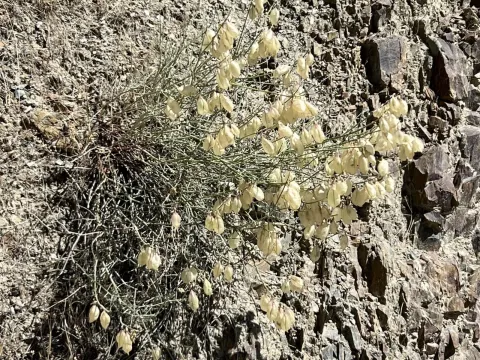
Cusick's milkvetch
Astragalus cusickii
Cusick's milkvetch (Astragalus cusickii) is a perennial herbaceous plant belonging to the Fabaceae family. It is native to the western regions of North America, where it thrives in arid to semi-arid environments, demonstrating remarkable adaptation to harsh climates.
What the section contains
Cusick's milkvetch
The botanical structure of this species is characterized by a deep and extensive root system. This biological trait enables the plant to access moisture from significant depths, ensuring survival during prolonged droughts and hot, dry summers typical of its natural range.
Cultivation requires well-drained, sandy, or gravelly soils. The species is highly sensitive to waterlogged conditions, which can lead to root rot. Therefore, it is critical to avoid soils with poor aeration or high clay content when planning a site for this crop.
Optimal growth conditions involve exposure to full sunlight. The plant is well-adapted to neutral to slightly alkaline soil reactions. Given its hardiness, it is particularly suitable for reforestation and land reclamation projects in degraded or barren ecosystems.
In terms of agricultural use, Astragalus cusickii is primarily valued for its role in soil stabilization and nitrogen fixation. Its ability to colonize difficult terrains makes it an excellent candidate for erosion control programs and sustainable pasture improvement strategies.
Cusick's milkvetch is susceptible to several pest species that target its reproductive structures. Seed-feeding weevils are the most common concern, as they can cause significant yield loss by feeding on developing seeds within the pods.
Fungal pathogens such as powdery mildew represent a significant threat to leaf health. These conditions are exacerbated in high humidity or stagnant air environments, making proper plant spacing essential for maintaining adequate airflow within the crop canopy.
Root pathogens are a major issue when soil drainage is insufficient. Constant moisture around the root zone encourages fungal development, which can lead to rapid wilting and plant death, often weakening the stand integrity over time.
Integrated pest management (IPM) practices are highly recommended. This includes the use of certified disease-free seeds and the implementation of long crop rotations to break the lifecycle of soil-borne pathogens and pests specific to the legume family.
Monitoring the field for signs of early infestations is crucial for successful cultivation. Timely identification allows for targeted interventions, reducing the need for broad-spectrum pesticides and preserving the beneficial insect population in the agro-ecosystem.