
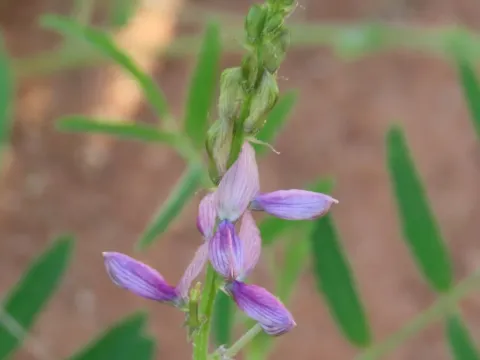
Cyamopsis senegalensis
Cyamopsis senegalensis
Cyamopsis senegalensis is an annual herbaceous plant belonging to the Fabaceae family. Native to the arid and semi-arid regions of Africa, this species is highly valued for its natural resilience and ability to thrive in challenging environments where other crops typically fail.
What the section contains
Cyamopsis senegalensis
Botanically, the plant is characterized by a sturdy stem and specialized leaf structures that assist in moisture retention. Its root system is notably extensive, allowing it to tap into deep water reserves, which is a critical trait for surviving the harsh climatic conditions of the Sahel and beyond.
The cultivation requirements focus primarily on well-drained, sandy, or light-textured soils. The plant is extremely sensitive to waterlogging, necessitating careful site selection to avoid anaerobic conditions that could lead to root diseases or stunted growth.
Agricultural management of this crop centers on its low-input nature. It generally requires full sun exposure and warm temperatures throughout the growing season to reach its full vegetative potential. Planting should coincide with the onset of the rainy season to ensure uniform emergence.
Economically, Cyamopsis senegalensis is utilized as a source of high-quality forage for livestock in dryland areas. Furthermore, as a member of the legume family, it serves a vital role in sustainable agriculture by replenishing soil nitrogen levels through its symbiotic relationship with rhizobia bacteria.