
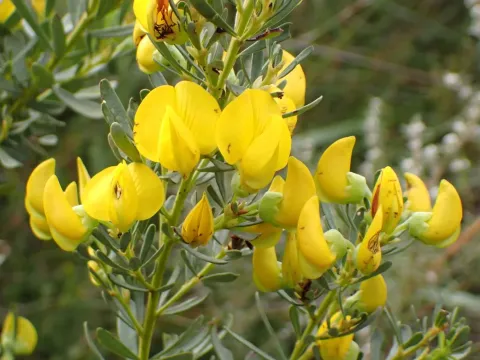
Cyclopia
Cyclopia
Cyclopia, popularly known as Honeybush, is a woody legume native to the Western and Eastern Cape provinces of South Africa, typically propagated from seeds.
What the section contains


Cyclopia
Due to the hard, waxy seed coat, seeds often undergo pre-sowing treatments such as scarification or exposure to heat, mirroring natural fire-induced germination.
Sowing is usually performed in nursery trays to ensure optimal protection for germinating seeds, with a transition to the field during the favorable growing season.
The germination process can be slow and sporadic, requiring precise management of humidity and substrate composition to achieve successful seedling emergence.
Proper spacing is crucial to allow for root development and adequate airflow, which prevents the build-up of moisture around the base of the young plants.
Cyclopia thrives in acidic, nutrient-poor, and sandy soils, which are characteristic of the fynbos biome where this genus naturally occurs.
Excellent soil drainage is the single most important factor for success, as the plants are highly susceptible to root rot in waterlogged environments.
The plants require full sunlight for optimal growth, which promotes the development of the sweet, honey-like aromatic compounds found in the foliage.
As a member of the Fabaceae family, Cyclopia forms symbiotic relationships with soil bacteria that assist in nitrogen fixation, reducing the need for chemical fertilizers.
It prefers a temperate climate and is generally resilient to periodic dry spells, though supplemental irrigation might be necessary during the initial establishment phase.
Root rot caused by Phytophthora species is a critical threat to Cyclopia plantations, especially when management practices include over-irrigation or poor drainage.
Insect pests, such as aphids and scale insects, can infest the canopy, stressing the plant and potentially serving as vectors for viral diseases.
Competition from invasive plant species is a constant threat in its natural range, necessitating active management and mechanical weeding of the production plots.
Fungal leaf spots can occur during high-humidity periods, requiring careful monitoring and the removal of affected plant tissue to limit the spread.
Maintaining strong biodiversity and using integrated pest management techniques are essential for the long-term sustainability of a Cyclopia farm.
Harvesting Cyclopia is typically done on a three-year cycle, as the shrub requires time to establish a mature root system and sufficient biomass for sustainable yields.
The harvest involves cutting the stems and leaves during the flowering stage, which ensures the highest concentration of the unique polyphenols and honey-scented oils.
Post-harvest processing is a critical stage where the plant material is fermented, dried, and cut into specific sizes for tea production.
The traditional method involves stacking the material to generate natural heat, which transforms the green leaves into the characteristic deep-colored Honeybush tea.
Efficient harvesting techniques focus on removing only the required foliage while preserving the structural integrity of the plant to encourage regrowth for future cycles.