
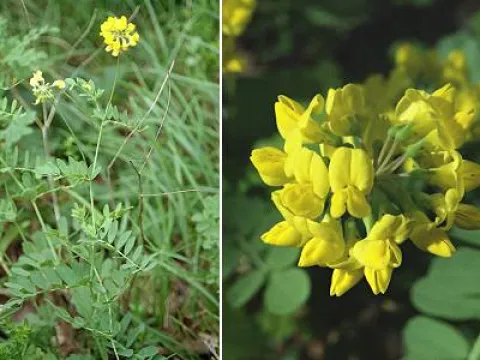
Crown vetch
Coronilla coronata
Sowing of Crown vetch is typically performed in the spring when soil temperatures stabilize between 8 and 10 degrees Celsius. This timing ensures that seedlings establish a strong root system before the onset of extreme summer heat or drought conditions.
What the section contains
Crown vetch
Due to the hard-seeded nature of the species, mechanical scarification is highly recommended before planting. This process helps water absorption, which dramatically improves germination rates and creates a uniform stand throughout the field.
The seeding rate is determined by the intended use of the crop. For forage production, row planting with spacing of 15–20 cm is common, whereas seed production plots may require wider spacing to encourage plant branching and better reproductive development.
Seed depth should be kept shallow, generally between 1.5 and 2.5 cm. Firming the soil after sowing using a roller is a crucial step, as it improves the seed-to-soil contact necessary for consistent emergence across the entire planting area.
Crown vetch exhibits slow initial growth, which makes it vulnerable to weed competition during the first season. Utilizing pre-emergent weed control measures or mechanical cultivation between rows is essential during the establishment phase to ensure long-term crop success.
As a member of the Fabaceae family, Crown vetch is a perennial legume that thrives in a variety of environments. It prefers full sun exposure and is highly adapted to open fields where it can maximize its photosynthetic potential and flowering output.
This crop is recognized for its exceptional drought tolerance, allowing it to perform well on marginal lands, slopes, and embankments where other crops might fail. It shows good resilience to varying weather conditions, including cold winters.
Regarding soil preferences, Crown vetch performs best in alkaline or neutral loamy soils that are rich in calcium. It does not tolerate highly acidic or waterlogged soil conditions, which inhibit the growth of nitrogen-fixing nodules on its roots.
One of the primary benefits of this crop is its ability to fix nitrogen biologically, which contributes to overall soil enrichment. Its deep, fibrous root system makes it an excellent candidate for soil stabilization and the prevention of erosion on steep terrain.
Proper field management includes ensuring adequate drainage. While the plant is hardy, it requires well-aerated soil to support the microbial activity in the root zone, which is critical for its health and overall vigor during the growing season.
Crown vetch provides a reliable source of high-protein forage, although its annual biomass yield is generally lower than that of alfalfa. Under optimal growing conditions, it can yield significant amounts of hay, suitable for grazing or winter feeding.
The crop typically reaches peak productivity starting from the second year after planting. Depending on the moisture availability, it is possible to harvest two cuts per season without depleting the plant's resources, provided that the timing is managed correctly.
Seed production is an important secondary use for this crop. Because the plant is a prolific bloomer and a noted honey plant, attracting pollinators to the field is essential to ensure high seed yields at the end of the reproductive cycle.
In terms of forage quality, the foliage is rich in nutrients, making it highly palatable for livestock such as sheep and goats. It is often recommended as a component in mixed pastures to improve the overall dietary intake of grazing animals.
The crop's dual-purpose nature makes it valuable for both agricultural production and conservation. By managing it as a cover crop or pasture plant, farmers can benefit from its soil-building properties while simultaneously producing viable animal feed.
Crown vetch is generally considered to be a robust and disease-resistant crop. However, in environments with persistent high humidity, root rot fungi, particularly those in the Fusarium genus, can pose a risk if drainage is inadequate.
Key insect threats include the clover root curculio, which can damage the plant's root system during the early stages of growth. Monitoring these pests is important, and early insecticide application can prevent significant population spikes.
Aphids can occasionally infest the plants during warm, dry spells, leading to stunted shoot growth and leaf curling. While usually not lethal, a high aphid density can significantly reduce the overall biomass yield and the quality of the green matter.
Powdery mildew is a common foliar condition that may appear during seasons of excessive rain. Maintaining proper plant spacing and ensuring good airflow within the canopy are the best preventative measures to mitigate the spread of this fungal condition.
An effective agronomic management strategy involves regular scouting of the fields throughout the growing season. Early identification of biotic stressors allows for targeted intervention, reducing the need for broad-spectrum chemical treatments.