
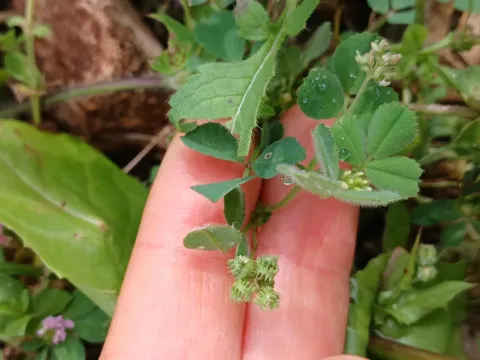
Crown medic
Medicago coronata
Crown medic (Medicago coronata) is an annual herb belonging to the Fabaceae family. It is a Mediterranean native plant that thrives in sunny, open habitats with rocky or well-drained soils, showing excellent adaptation to dry environments.
What the section contains
Crown medic
The plant is known for its distinctive crown-shaped seed pods, which are a defining characteristic for taxonomic identification. It grows primarily in low-moisture conditions where it acts as a hardy forage source for local livestock.
Regarding soil requirements, it prefers alkaline to neutral substrates with good drainage properties. It does not tolerate waterlogging, which can easily trigger root rot and inhibit the plant's growth potential in agricultural settings.
Crown medic exhibits a robust response to high solar radiation levels. It requires full sunlight to develop fully and to produce viable seeds, making it unsuitable for shady areas or areas with high canopy density.
As a legume, it has the ability to fix atmospheric nitrogen through symbiosis with Rhizobium bacteria. This biological feature makes it an interesting candidate for ecological land management and improving soil fertility in arid regions.
Fungal leaf spots represent the most frequent threat to crown medic when exposed to unexpected humidity peaks. These pathogens cause chlorosis and early leaf senescence, reducing the nutritional value of the foliage.
Insects like weevils are known to damage the flowering parts of the plant. Since Medicago coronata relies on successful seed production for its annual renewal, such damage can lead to a decline in population density in following seasons.
Aphid outbreaks can occur during early spring, targeting tender shoots and depriving the plant of essential nutrients. This mechanical stress limits the vegetative growth and overall yield of the stand.
Root-knot nematodes can also be a hidden threat, especially in soils that have hosted legumes for several consecutive years. Crop rotation remains the most effective strategy to manage these soil-borne parasites.
Sustainable management requires careful observation of the plant's vigor. Maintaining healthy soil conditions and avoiding overgrazing are the primary methods to ensure that the stand remains resistant to common biological stressors.