
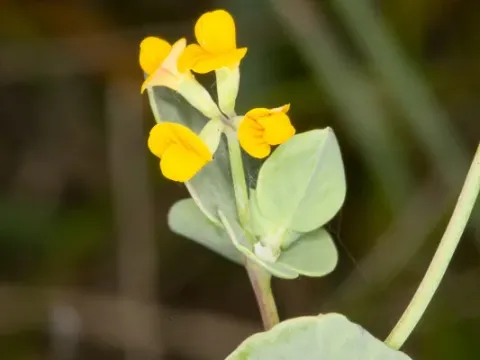
Crownvetch
Coronilla
Crownvetch (Coronilla varia) is a perennial legume highly valued for its adaptability and soil-binding properties. It is widely recognized for its ability to thrive in diverse environments, from steep embankments to reclaimed land.
What the section contains


Crownvetch
The optimal time for sowing Crownvetch is in early spring once the soil begins to warm up. Fall planting is also feasible in milder climates, allowing the seeds to benefit from winter dormancy and improve germination success in the following spring.
When sowing, seeds should be planted at a shallow depth of approximately 1 to 2 centimeters. Because the seeds are small, ensuring good soil-to-seed contact is essential for successful germination and early plant establishment.
During the first year, Crownvetch establishes its root system slowly and is sensitive to competition from weeds. Providing a clean seedbed and removing competing vegetation during the initial establishment phase is crucial for long-term survival.
Once established, the plant spreads through an extensive system of rhizomes. This rapid expansion makes it an excellent choice for stabilizing disturbed soils, although it may become invasive if not managed correctly in controlled agricultural settings.
Crownvetch prefers well-drained soils and is particularly effective on sites with neutral to slightly alkaline pH levels. It is remarkably drought-tolerant once established, making it a sustainable choice for areas with limited irrigation capacity.
Sunlight is a key requirement for the health of Crownvetch, as it thrives in full sun. While it can tolerate partial shade, its density and vigor are significantly reduced in less-than-optimal light conditions.
Nitrogen fixation is a major biological advantage of this crop. As a legume, it forms a symbiotic relationship with specific bacteria in its root nodules, which enriches the soil with nitrogen, benefiting neighboring plant species in a mixture.
The crop does not tolerate waterlogged or saturated soil conditions, which can lead to root rot and loss of the stand. Selecting sites with good natural drainage or preventing soil compaction is vital for maintaining a healthy field.
In addition to its soil-binding benefits, Crownvetch serves as a late-season nectar source for pollinators. Its ability to thrive in nutrient-poor soils helps prevent erosion on highway slopes, strip mines, and other highly disturbed landscapes.
Crownvetch is relatively resistant to many diseases, but powdery mildew can occur under conditions of poor air circulation and high humidity. Proper field management, including thinning or timely harvesting, helps mitigate this risk.
Common agricultural pests, such as aphids and various weevils, may impact leaf tissue or reproductive structures. Integrated pest management strategies, focusing on biological controls, are typically sufficient to keep pest numbers below economic thresholds.
Root rot caused by fungal pathogens can become a threat in heavy, poorly drained soils. Avoiding the planting of Crownvetch in compacted areas and ensuring proper crop rotation can prevent the buildup of soil-borne pathogens.
Due to the presence of certain glycosides, Crownvetch should be managed carefully if used as animal forage. It is recommended to feed it as part of a mixed forage program rather than as a sole grazing source to ensure livestock safety.
Its aggressive growth habit means that in certain regions, Crownvetch can be classified as an invasive species. Land managers must take steps to control its spread into non-target areas through regular mowing or mechanical barriers.