
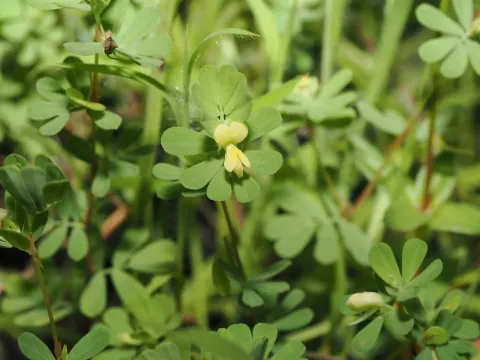
Cyclocarpa
Cyclocarpa
Cyclocarpa, belonging to the Fabaceae family, is a specific tropical crop. The optimal sowing time coincides with the start of the rainy season, when the soil is warm enough and atmospheric humidity ensures rapid seed germination.
What the section contains

Cyclocarpa
For a successful start, seeds require a stable temperature of at least 20-22 degrees Celsius. Sowing is carried out in rows at a depth of 2-3 centimeters, depending on the substrate structure.
In industrial cultivation, it is important to maintain a row spacing of 40-50 centimeters to ensure high-quality aeration of the crops. Even distribution of seeds is key to uniform emergence and high crop competitiveness against weeds.
Using stratified or pre-soaked seeds accelerates sprout appearance by 3-5 days. Agronomists recommend sowing in the early morning when soil surface moisture evaporation is minimal.
It is important to monitor soil preparation quality: leveling the surface prevents water stagnation, which is critical during the initial development stage of young Cyclocarpa plants.
The crop has high temperature requirements, preferring tropical and subtropical climates. The optimal temperature range for vegetation is 25-30 degrees Celsius.
The plant thrives in loamy and sandy loam soils with a neutral or slightly acidic pH. Good drainage is essential, as water stagnation in the root zone can lead to fungal infections.
Cyclocarpa is light-loving and requires full solar exposure throughout the day. Insufficient sunlight leads to stem stretching and a decrease in overall biological productivity of the green mass.
During growth, the plant requires regular but moderate watering. Although the crop can tolerate short periods of drought, maintaining soil moisture at 60-70% of field capacity is vital for high yields.
The application of phosphorus and potassium-based fertilizers strengthens the root system and increases plant resistance to adverse environmental factors.
Cyclocarpa green mass yield depends on the intensity of agricultural practices and soil fertility levels. Following all recommendations allows for achieving high biomass output per hectare.
Economic use of the crop is primarily focused on producing high-protein feed for livestock. The green mass is distinguished by high nutritional value and good digestibility.
Long-term observations show that with correct harvesting, the crop can provide several yields per growing season. It is important to mow during the budding phase when protein content is maximized.
To preserve yield potential, it is recommended to leave 10-15 cm of stubble, which stimulates rapid regrowth from dormant buds.
Additional nitrogen fertilization after each cutting significantly boosts the productivity of subsequent growth cycles, making the cultivation of this crop economically justified.
Root rot, which occurs during soil waterlogging, is the main threat to Cyclocarpa. To prevent this, strict control of the irrigation regime and deep inter-row cultivation are necessary.
Pests such as leaf-eating insects and aphids can cause significant damage during hot, dry periods. Regular field inspections allow for the early detection of infestation hotspots.
Other pathogens include leaf spot, which reduces photosynthetic activity when spreading extensively. Biological fungicide treatment is an effective control measure.
Disease prevention includes crop rotation. Planting Cyclocarpa after other legumes is not recommended as it increases the risk of soil-borne pest accumulation.
- Regular weeding reduces competition for nutrients.
- Using seeds resistant to local disease strains increases harvest stability.
- Pest monitoring helps reduce chemical usage volumes.
Harvesting is mainly carried out mechanically using specialized forage harvesters. The optimal time to start is during the mass flowering period when the plant contains maximum nutrients.
The mown mass must be quickly transported to processing or drying facilities to prevent self-heating and spoilage. If hay production is required, uniform field wilting must be ensured.
In high-humidity regions, artificial drying is recommended to maintain the color and biological value of the feed. This prevents mold development and preserves the vitamin composition.
Correct logistics management minimizes mass losses during transport from the field to the storage site. The use of modern loaders significantly speeds up the collection process.
After harvesting, disking is recommended to incorporate crop residues, which further enriches the soil with organic matter, improving fertility for subsequent crops.