
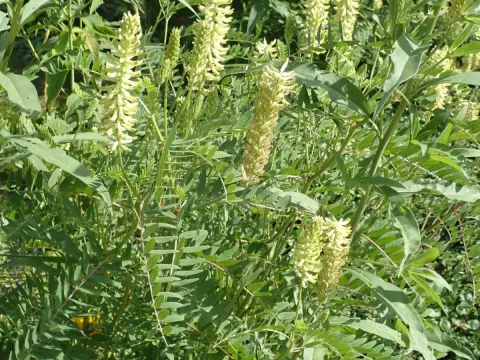
Canadian milkvetch
Astragalus canadensis
Canadian milkvetch (Astragalus canadensis) is a hardy perennial legume known for its exceptional soil-building properties and forage value. Sowing is typically performed in early spring, once the soil has warmed sufficiently to ensure rapid germination.
What the section contains
Canadian milkvetch
The seeds of this species possess a hard seed coat, making mechanical or chemical scarification essential for successful establishment. Proper seed treatment can increase germination rates by over 50 percent, ensuring a thick and productive stand.
Seeding rates range from 8 to 12 kilograms per hectare, depending on the method used. Drills are preferred to provide uniform spacing, typically 20 to 30 centimeters apart, which promotes vigorous growth while minimizing competition from invasive weeds.
Depth of sowing should be managed carefully, with 2 centimeters being the ideal target. Planting too deeply in heavy soils can prevent the small seedlings from emerging, leading to patchy fields that require expensive overseeding.
During the first year, Canadian milkvetch focuses on developing a deep, robust root system. Consequently, growth above the ground might appear slow, but this investment ensures the plant's long-term survival and drought resistance in subsequent years.
This species is highly adaptable, demonstrating significant tolerance to a wide array of environmental conditions. It is especially prized for its cold hardiness, surviving harsh winters that would otherwise devastate less resilient forage legumes.
While it thrives in fertile, well-drained loams, Canadian milkvetch is notably tolerant of heavier clay soils where other crops struggle. It requires neutral to slightly alkaline pH levels for optimal nutrient uptake and nitrogen fixation.
Sunlight is a key requirement for maximum productivity. The plant does not tolerate deep shading from competing vegetation, so site selection should prioritize open areas with consistent exposure to sunlight throughout the growing season.
It displays remarkable drought tolerance due to its deep taproot, which allows it to access water reserves deep within the soil profile. This makes it an excellent candidate for semi-arid regions or areas prone to irregular rainfall patterns.
The plant engages in a symbiotic relationship with specific soil bacteria, allowing it to fix atmospheric nitrogen. Maintaining balanced fertility, particularly phosphorus and potassium levels, ensures the plant reaches its full potential as a soil improver.
The yield potential of Canadian milkvetch is consistently high, particularly once the stand is fully established by the second or third year. Growers can expect multiple cuts per season under favorable growing conditions.
Green matter yields typically range from 25 to 40 tonnes per hectare, depending on local climate and management intensity. When harvested as hay, the yield remains quite competitive with other standard forage legumes like alfalfa.
Nutritional quality is maintained well into the flowering stage, providing farmers with a wider harvest window. The forage is rich in protein, making it an excellent dietary supplement for various types of livestock, including cattle and sheep.
Seed production is another beneficial aspect of cultivating this crop. Properly managed stands can produce sufficient yields of seed to maintain or expand operations without the need for frequent purchasing of external planting stock.
Because the stand can persist for over a decade, the cumulative yield over the lifetime of the field is substantial. This longevity reduces the necessity for repeated soil preparation, saving time, fuel, and labor costs for the farm operation.
Fungal pathogens such as rust and powdery mildew are the most common threats, particularly in regions with high humidity or poor air circulation. These infections can reduce the quality of the harvested hay if left unchecked.
Insect pests, including various weevil species and aphids, can cause localized damage to foliage and developing buds. Monitoring the fields during the early spring and summer months is vital to mitigate these risks before they affect the crop's vigor.
Proper harvest timing is an effective cultural control for many pests and diseases. By removing the plant matter at the onset of flowering, farmers effectively disrupt the lifecycle of many pathogens and maintain a healthy field environment.
Over-seeding or allowing fields to become overly dense can encourage disease outbreaks. Maintaining recommended plant spacing is essential to ensure adequate airflow and sunlight penetration to the lower leaves of the plants.
Biological controls and resistance-focused breeding are the preferred methods for protecting the crop. Canadian milkvetch is generally robust enough to handle low-level pest pressure without requiring intensive chemical pesticide applications.
For high-quality forage, harvesting should occur during the early flowering phase. This timing provides the best balance between total dry matter yield and protein content, ensuring the feed meets the nutritional requirements of animals.
Mechanical harvesting with modern equipment is highly effective. The use of mower-conditioners is recommended to facilitate faster drying times, which helps preserve the essential vitamins and minerals that define high-grade hay.
Seed harvesting requires precision to prevent excessive shattering losses. The crop should be collected once the seed pods have turned brown but before they become brittle enough to split open while still attached to the plant.
Combines should be adjusted for a gentle threshing process, given the small size of the seeds. Proper cleaning and drying post-harvest are crucial to ensure the viability and vigor of the seed for future planting cycles.
Storage of the hay should take place in dry, ventilated areas to maintain quality. Given the robustness of Canadian milkvetch, the resulting forage stores exceptionally well, providing a reliable winter feed source for livestock operations.