
Canary broom
Genista canariensis
Description
Growing requirements
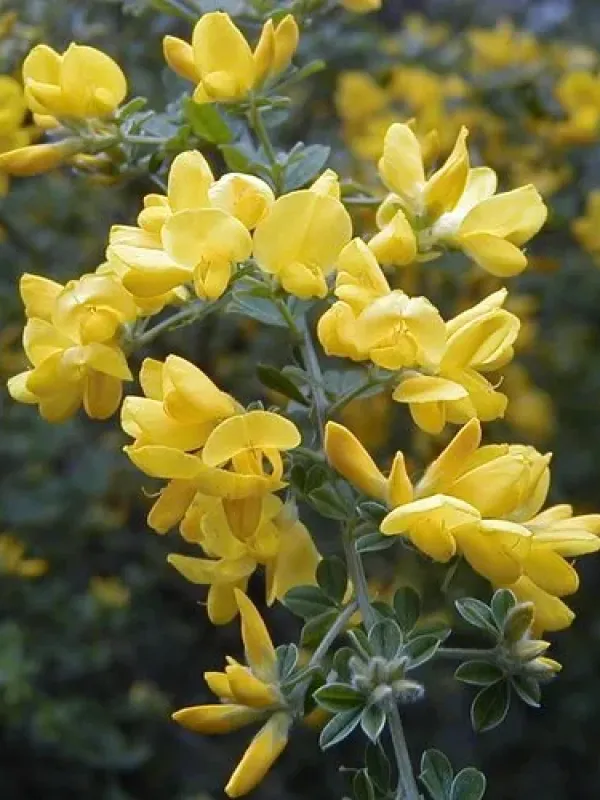
Canary broom (Genista canariensis) is an evergreen shrub belonging to the Fabaceae family. Native to the Canary Islands, it is highly valued for its striking, fragrant, bright yellow flowers that bloom in terminal clusters, adding immense aesthetic appeal to gardens.
This species thrives in full sunlight and requires well-drained, sandy, or rocky soil types. It is particularly sensitive to soil compaction and waterlogging, which often leads to root rot. Therefore, choosing a location with excellent drainage is crucial for plant longevity.
Regarding climate, Canary broom is a sub-tropical plant that is not cold-hardy. In regions with freezing winters, it must be grown as a container plant and moved to a frost-free greenhouse or conservatory during the colder months of the year.
Agrotechnical management involves moderate watering, allowing the top layer of soil to dry out between sessions. Pruning should be performed immediately after the flowering period to maintain a compact shape and encourage denser growth for the following season.
Economically, the plant is widely used as a decorative element in landscapes, rock gardens, and container arrangements. As a rich source of nectar, it supports local biodiversity by attracting bees and other pollinators during its spring bloom.
Main diseases and pests
The primary threats to Canary broom include root fungal pathogens triggered by poor drainage. Preventing water accumulation in the potting mix or garden soil is the most effective way to avoid these fatal conditions.
Pests such as spider mites and mealybugs are the most common adversaries, especially in indoor environments where humidity levels are low. These pests colonize the stems and foliage, significantly weakening the plant over time.
Treatment involves the application of appropriate miticides and insecticides. To prevent infestations, it is advised to maintain optimal ambient humidity and ensure adequate spacing between plants to allow for airflow.
Regular sanitation, such as removing dead or dying branches, helps in curbing the spread of diseases. If an infection is severe, fungicides may be necessary to protect the overall structure of the shrub.
Finally, growers should avoid overhead watering to reduce the risk of leaf spot diseases. Observing the plant closely for signs of discolouration or webbing ensures that problems are addressed before they cause irreparable damage.