
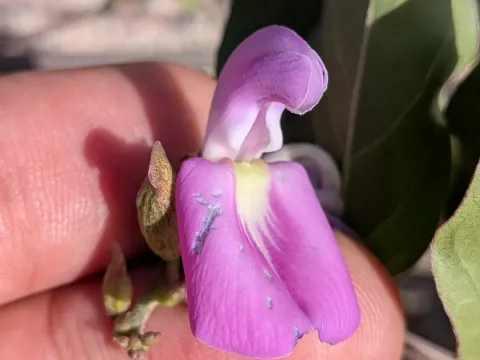
Canavalia
Canavalia
Canavalia is a heat-loving crop; therefore, planting should occur only after the risk of frost has passed and soil temperatures have reached at least 15-18°C.
What the section contains


Canavalia
In tropical regions, sowing is typically timed with the onset of the rainy season to provide the seedlings with sufficient moisture for rapid development.
Seeds are sown at a depth of 5–7 cm, with row spacing maintained at 40–60 cm to ensure adequate space for the sprawling vegetative growth of the plant.
If used as a green manure or cover crop, higher density planting is often practiced to suppress weed growth and maximize total biomass production.
Care must be taken to avoid sowing into cold, waterlogged soils, as the large seeds are prone to rotting before germination in such environments.
Canavalia is a genus of plants belonging to the legume family (Fabaceae), widely recognized for its robust vines and nitrogen-fixing abilities.
The crop is highly drought-tolerant, featuring a deep taproot system that enables it to access water reserves in deeper soil profiles during dry periods.
While adaptable to various soil types, Canavalia prefers well-drained, fertile soils with a pH ranging from neutral to slightly acidic.
Exposure to full sunlight is essential for successful cultivation, as the plant requires intense solar radiation to drive its vigorous growth cycles.
Trellising or support structures are recommended for vining varieties to ensure proper airflow and prevent the pods from contact with damp soil.
Canavalia is highly valued for its exceptional biomass production, often yielding significant amounts of green matter per hectare in optimal tropical climates.
Grain yield depends heavily on the specific variety, local weather conditions, and the effectiveness of nodulation with soil-based Rhizobium bacteria.
With proper management, the crop can produce multiple harvests of pods, significantly contributing to both soil fertility and forage availability.
Improving harvest potential involves regular monitoring of soil nitrogen levels and ensuring that the plants are not shaded by competing vegetation.
Average productivity is generally high, making it a reliable choice for sustainable farming systems looking to enhance crop rotation cycles.
The crop is susceptible to fungal diseases such as anthracnose and root rot, particularly in conditions of high humidity and poor soil drainage.
Pests like bean beetles and aphids can cause considerable damage to foliage and developing pods if left uncontrolled by integrated pest management.
Nematode infestations can occur in fields where Canavalia is grown continuously, necessitating the use of crop rotation to break the parasite cycle.
Powdery mildew may affect plants grown in densely packed stands where air circulation is restricted by excessive foliage growth.
Proactive monitoring and the application of organic or chemical control measures are necessary to protect the yield from significant damage.
Harvesting for seed production is done when the pods have fully dried on the vine, turning a tan or brown color and becoming brittle.
Green manure harvesting is best timed during the early flowering stage to capture the highest nitrogen content in the plant tissues.
Mechanical harvesting is challenging due to the vining nature of the plant, often requiring specialized equipment to cut and collect the biomass efficiently.
Post-harvest, seeds should be thoroughly dried and cleaned to prevent fungal growth during storage in a cool, ventilated environment.
Maintaining seed moisture content below 14% is crucial for long-term viability and to ensure success for the following planting season.