
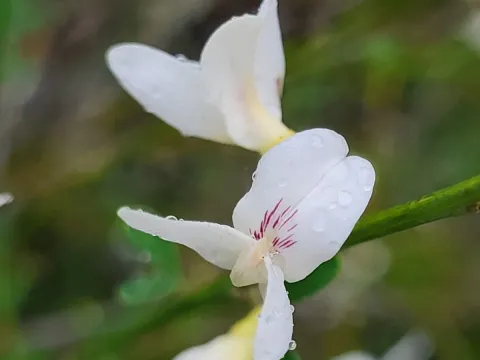
Canary Island broom
Cytisus filipes
The Canary Island broom, or Cytisus filipes, is a shrub belonging to the Fabaceae family, native to the Macaronesian region. It is highly regarded for its slender, pendulous branches that create a delicate, cascading effect in garden landscapes.
What the section contains
Canary Island broom
For successful cultivation, this shrub requires well-draining soil, ideally of a sandy or gritty composition. It thrives in locations where the substrate allows for rapid water drainage, preventing the roots from staying saturated for too long.
Climatically, it is a heat-loving species that is not tolerant of frost. In temperate zones, it is best managed as a container plant, allowing it to be moved to a sheltered or frost-free environment during the winter months.
Sunlight is critical for this species; it should be planted in full sun to ensure healthy growth and profuse blooming. Inadequate lighting results in poor structural development and significantly reduced flower production.
Cultural practices should include minimal fertilization and careful pruning. Shaping the plant immediately after the flowering season encourages fuller growth and improves the overall aesthetic of the shrub for the following year.
The most significant health risks for Cytisus filipes involve root rot caused by poor soil drainage and overly humid atmospheric conditions that favor the development of fungal leaf pathogens.
Common insect pests include aphids, which often cluster on succulent new growth. Additionally, spider mites can become an issue in warm, arid conditions or indoor environments, causing chlorosis in the foliage.
Effective management includes the application of appropriate pesticides and fungicides when early symptoms of infestation or infection appear to prevent the spread to the entire specimen.
Cultural control, such as ensuring adequate spacing between plants and avoiding overhead watering, significantly reduces the likelihood of fungal outbreaks throughout the growing season.
Regular monitoring of the foliage and stems allows for early intervention, ensuring the long-term vitality of the shrub and preserving its unique, elegant appearance.